An avid reader whose current interest lies in mysteries and thrillers. Line 'em up!
Also personally love fantasies and any stories to do with magic, and a sucker for the occasional (good) romance.
As a botanist, Robin Wall Kimmerer has been trained to ask questions of nature with the tools of science. As a member of the Citizen Potawatomi Nation, she embraces the notion that plants and animals are our oldest teachers. In Braiding Sweetgrass, Kimmerer brings these lenses of knowledge together to show that the awakening of a wider ecological consciousness requires the acknowledgment and celebration of our reciprocal relationship with the rest of the living world. For only when we can hear the languages of other beings are we capable of understanding the generosity of the earth, and learning to give our own gifts in return.
Not exactly the most traditional of books to be reviewing, and even less so on this blog. But once again I find it pertinent to mention and at least disseminate this knowledge into the world, so here we are! Braiding Sweetgrass: Indigenous Wisdom, Scientific Knowledge, and the Teaching of Plants is more of the full title, and gives you a better glimpse as to what the book is about. If you’re ever looking for something that is more worldly, but still told like a story, please feel free to give this one a try!
I chose this book as a way to connect to the community but also because of its scientific relevance which I found appropriate for my background. I found it extremely intellectually stimulating and emotionally evocative, and if you also have a science background, undoubtedly you will find an extra connection to the words of the author. But even if not, all the information is very easy to absorb, and I promise you the journey is worth it.
Let’s Talk Bookish is a weekly meme, hosted by Rukky @ Eternity Books & Dani @ Literary Lion, where they discuss certain topics, share their opinions, and spread the love by visiting each others’ posts.
DECEMBER 17: HOW MANY BOOKS IS TOO MANY?
With holidays coming up there’s bound to be a lot of gift giving. I’m sure many of us will ask for more books to add to our collection – but how many books is too many? Do you think the book community encourages over consumption?
Welcome to another week of LTB everyone! With the new year around the bend (soooo quickly), it’s only a matter of time before we may or may not be stuffing our faces in the holiday indulgence! Hope everyone has a great time no matter what you celebrate. Today’s topic is certainly a fun one!
Do most people ask for books for gifts? I feel like it’s something I contemplate more on the giver side. I’m not sure I personally ask for a book in particular, nor even for a book in general (though I do believe I have done it once). On the other hand, when contemplating gifts for a bookish friend, I almost immediately turn to thinking of which book they might want, and trying to sneakily figure out if they don’t have it yet too. I am not sure how many of you agree, but I feel like gifting a book is more exciting than asking for and expecting a book.
That being said, though I don’t usually ask, I almost always wouldn’t mind receiving a book as a gift. Especially if someone thought of me specifically and wanted to gift me a book, what could be more special than that? But I guess the question here is, how many books is too many? I tend to think once your shelf is full, you’re in the deep waters, and you better make new space or buy new space for the influx of books.
It’s so hard to know how many are too many. When some of your books get old, should you just donate them and re-home them to younger readers? Should you not buy too many (or receive too many) to overfill your shelves? Who likes empty shelves though?!
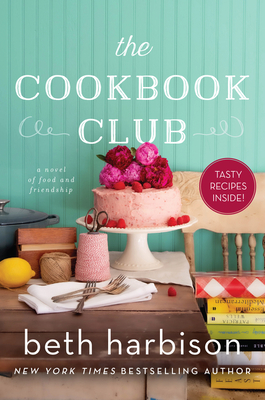
New York Timesbestselling author Beth Harbison whips together a witty and charming–and delicious–story about the secrets we keep, the friends we make, and the food we cook.
MUST LOVE BUTTER: The Cookbook Club is now open to members. Foodies come join us! No diets! No skipping dessert!
Margo Everson sees the call out for the cookbook club and knows she’s found her people. Recently dumped by her self-absorbed husband, who frankly isn’t much of a loss, she has little to show for her marriage but his ‘parting gift’—a dilapidated old farm house—and a collection of well-loved cookbooks
Aja Alexander just hopes her new-found friends won’t notice that that every time she looks at food, she gets queasy. It’s hard hiding a pregnancy, especially one she can’t bring herself to share with her wealthy boyfriend and his snooty mother.
Trista Walker left the cutthroat world of the law behind and decided her fate was to open a restaurant…not the most secure choice ever. But there she could she indulge her passion for creating delectable meals and make money at the same time.
The women bond immediately, but it’s not all popovers with melted brie and blackberry jam. Margo’s farm house is about to fall down around her ears; Trista’s restaurant needs a makeover and rat-removal fast; and as for Aja, just how long can you hide a baby bump anyway?
In this delightful novel, these women form bonds that go beyond a love grilled garlic and soy sauce shrimp. Because what is more important in life than friendship…and food?
This was another book I just randomly took off the shelf while I was at the library the other day. It is essentially a chick flick in a book format, which is not to say that it’s bad though. As a story revolving around food and three women facing their struggles and finding their way, this book really did live up to its cozy title, pretty much perfect for this autumn (borderline winter) weather.
The Cookbook Club is a story that revolves around three different women, each with their own newfound struggle in their life, be it love or life. This book follows their individual struggles and is told from their POVs, but each chapter or “month” there is a quick cookbook party summary of what has transpired, and what the latest gossip from the party was. It’s a cozy and fast-paced story, and I finished the book very quickly. It’s a simple feel-good type of story, but still manages to have some interesting themes.
Overall the characters were believable, and their struggles were certainly relatable as well. The pacing at which everything happens the coincidences that appear weren’t the most believable, but in this kind of book, I can forgive it for not having the deepest most intricate plot. It also wasn’t ridiculous in its plot devices, so overall it was an easy and quick read that I really enjoyed this time of year.
I definitely enjoyed the food content, and there was even some content in the book that included the character live-streaming to an audience. I found this part particularly relatable, as I tend to watch a lot of cooking videos on my own time, and I felt that the author did a good job replicating the way these videos would actually be filmed in real life.
Some of the struggles that were portrayed and handled were definitely interesting. Many subtle hints and themes were present in terms of tackling some of these problems, and I felt that it was a palatable and relatable way of presenting the information. Overall, this made it an engaging and interesting read, without being overly preachy or unrealistic.
Overall Recommendations
The Cookbook Club is a multiple-POV story that follows three women in their adult lives as they struggle through new roadblocks in life. In what can only be described as a chick flick book, it is an entertaining story that moves at a rapid pace. And lots of mentions of food, which is always appreciated. Overall it is a happy feel-good type of novel, and is perfect for the winter if you’re ever looking for an easy cozy read by the fire!