3.5 star, YA

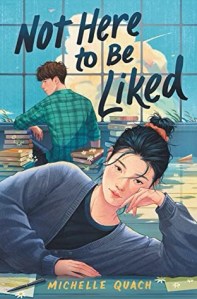
Review: Not Here to Be Liked by Michelle Quach

Emergency Contact meets Moxie in this cheeky and searing novel that unpacks just how complicated new love can get…when you fall for your enemy.

Eliza Quan is the perfect candidate for editor in chief of her school paper. That is, until ex-jock Len DiMartile decides on a whim to run against her. Suddenly her vast qualifications mean squat because inexperienced Len—who is tall, handsome, and male—just seems more like a leader.

When Eliza’s frustration spills out in a viral essay, she finds herself inspiring a feminist movement she never meant to start, caught between those who believe she’s a gender equality champion and others who think she’s simply crying misogyny.

Amid this growing tension, the school asks Eliza and Len to work side by side to demonstrate civility. But as they get to know one another, Eliza feels increasingly trapped by a horrifying realization—she just might be falling for the face of the patriarchy himself.


Not Here to Be Liked has left behind an impression on me that is both hard to eloquently write down and make coherent sense. I will try to organize it in some way, but please bear with me.

Firstly, I knew I was in love when I first turned on the audiobook and heard the first few chapters. Eliza Quan is a Vietnamese Chinese girl with parents who immigrated to North America as refugees from the aftermath of the Vietnam War. Her family has kept Chinese roots regardless of living in Vietnam for at least a generation so their household speaks a combination of Vietnamese and Cantonese. I’m just going to say that seeing (or rather, hearing) the Cantonese and every day references mentioned sent a delighted thrill of surprise through me. Like the following quote:

“Make sure you have enough rice to eat.”

Quan family motto

You have no idea how many times I grew up hearing this from my grandparents. It’s why I’m more of a noodle person as an adult because I had way too much rice as a child.

This made me feel like Eliza (and her family) was someone I intimately knew right away. Like she could’ve been a part of my family. Or my boyfriend’s family. It was so surreal to feel represented in fiction because I’m quite used to never seeing that. Even amidst the surge of Asian representation in YA, there was never any protagonist that quite hit the nail like Eliza did for me. (I won’t nitpick that the Cantonese spoken on the audiobook wasn’t quite without an accent, but it was still amazing!).

But aside from my personal connection to Eliza and her family, this book is about feminism. Or rather, the unwitting face of feminism Eliza becomes when someone released her rant – aka manifesto – about losing the school paper’s editor in chief vote. To a boy.

Maybe like most of us, we wouldn’t know what to do when we become the face of feminism among our peers. I sure wouldn’t. So all of a sudden, she’s launched into infamy, targeted by certain classmates with awful comments on social media and scrawled across her locker. Which in and of itself is sexist as the manifesto equally targets Len as the “face of patriarchy”. Why wouldn’t he get equal treatment against him, the target of the paper?

This exploration of “what makes one a feminist” and “how should a feminist act” was one I had to sit with for a while in writing this review. What does one immediately think of when we say “feminism”?

I’m a feminist, not a narcissist.

Eliza Quan

I do applaud Michelle Quach’s thoughts in the form of Eliza’s own internal questions and the different women she wrote about. Eliza definitely sat more in the middle, wanting to do her part, but not knowing if interacting with the enemy Len, made her a hypocrite and a terrible feminist. Her best friend Winona leaned more into the stereotype, for better or worse, that feminism sometimes bring to mind, wherein it’s more synonymous with anti-male. Meanwhile, the popular girl Serena that came into their lives in the aftermath of the manifesto embodied more of social action for something she stood for while not particularly looking or acting a certain way towards men. There was definitely growth in all three girls as they spearheaded the growing feminist movement in their school, but it was interesting noting the different directions each came at this same movement.

Quach also explored a little the impact of Asian cultures in wiring how women think through the experiences and stories Eliza’s mom told her, and the way she wanted her own daughter to behave. I appreciated that too because I can acknowledge it’s definitely there and prevalent in our societies even now. We do need more stories like this among POC communities, although I will also acknowledge it is a clash of Western and Eastern ways of thinking.

The romance, it seemed, fell somewhere behind all of this. It’s probably the only reason why I lowered my rating. I didn’t particularly feel the chemistry between Len and Eliza in their interactions. It could be because she wanted to hold onto her animosity towards him the whole time, but in getting to know Len, I came to realize he’s a pretty good guy and didn’t deserve the “face of the patriarchy” label. Of course, he still got off easy in the eyes of his peers (sexism, am I right?), but he wasn’t the villain the manifesto painted him out to be – or what I thought he’d be coming into this book.

Did I think it was a fun romance still? Sure, it was fine, but if a solid “enemies to lovers” trope is what’s bringing you here, you may need to rethink it a little. It’s definitely not the focus of this story.

All this to say, I reflected a lot as a result of reading this book about feminism and how I see myself, even, as a young woman in my society and among my peers. It’s made me think about how I can fight for equality, not superiority in any one sex, in my own life. And I think that is the point of this book, so it has done the job it’s set out to do.

Because feminism, contrary to popular belief, isn’t about hating on guys…It’s about all of us working toward equality, together.

Overall Recommendation:

Not Here to Be Liked was a wonderful reflection on feminism, especially in a young Asian girl where the culture largely dictated patriarchal values. I really enjoyed seeing the Asian influences and representation in this story, namely because Eliza spoke my language and has a very similar background with my own family. That being said, the book explores what it means to be a feminist in a way that is not condescending and looks at different angles through its various characters. While a romance is also present between Eliza and the “face of the patriarchy” Len, it is by far not the focus so the enemies to lovers storyline wasn’t fully fleshed out to satisfaction for romance lovers. Regardless of that one minor thing, I do think this is a worthwhile novel to pick up for its niche exploration of feminism in an Asian protagonist that sets it apart from other books currently out there. My thoughts may be a little all over the place, but this I know to be true at least.
5 star, adult

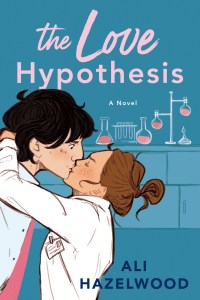
Review: The Love Hypothesis by Ali Hazelwood

As a third-year Ph.D. candidate, Olive Smith doesn’t believe in lasting romantic relationships–but her best friend does, and that’s what got her into this situation. Convincing Anh that Olive is dating and well on her way to a happily ever after was always going to take more than hand-wavy Jedi mind tricks: Scientists require proof. So, like any self-respecting biologist, Olive panics and kisses the first man she sees.

That man is none other than Adam Carlsen, a young hotshot professor–and well-known ass. Which is why Olive is positively floored when Stanford’s reigning lab tyrant agrees to keep her charade a secret and be her fake boyfriend. But when a big science conference goes haywire, putting Olive’s career on the Bunsen burner, Adam surprises her again with his unyielding support and even more unyielding… six-pack abs.

Suddenly their little experiment feels dangerously close to combustion. And Olive discovers that the only thing more complicated than a hypothesis on love is putting her own heart under the microscope.


I know this is definitely by far not an unknown book at this point, so I will keep my review more to what I personally really loved about The Love Hypothesis. And LOVE is definitely by far the right word to describe this book. It was un-put-downable (is that even a word??), and I absolutely devoured this one as fast as I could to get to Olive and Adam’s deserved ending.

Ph.D grad student Olive Smith, right off the bat, finds herself in a sticky situation when she grabbed the nearest man to kiss – which of course ends up being the jerk Dr. Adam Carlsen – in order to fake a relationship for her best friend’s sake. But by the weirdest circumstances, he suggests they continue the farce and pretend to date one another until a certain date where both parties would have accomplished what they needed from this “relationship”.

Uh, YES! Fake dating trope (with enemies to lovers thrown in there) at its very finest. Second to maybe unrequited best-friends-to-lovers trope, I absolutely ADORE this one, and Ali Hazelwood did NOT disappoint with how this was written. The angst! The miscommunication and unrequited love angle! The will-they-finally-do-something-about-their-obvious-chemistry? component! I couldn’t have asked for more in the romance department.

I loved how the relationship was explored little by little as the animosity between them slowly dissipated as they got to know one another. Or should I say, the animosity may have been more one-sided than mutual? It felt so real as Olive learned more about what made Adam tick and vice versa.

But I’m sure many other people have raved about this stuff already, and it deservedly meets the hype that is absolutely EVERYWHERE about this book.

The question is: why did I want to read this book? Yes, I’ve seen it everywhere but even before that, I fell in love with the synopsis. Because this book is about women in STEM, particularly in science. As a grad school graduate in the sciences, I felt so seen in this book. The little science references were scattered everywhere! I know this may fly over a lot of non-science background audience’s heads, but I thought these were hilarious.

“What’s wrong?” [Olive] had expected the answer to be The production of my reagent has been discontinued or My p-value is .06.

I mean, a p-value of 0.06 is nightmarish for research. Is it statistically significant? No. But clinically significant? Maybe? Who will publish it though???

And the lab work! I worked with mice for my fourth year thesis project in undergrad and just the little snippets about mice work here made my poor little heart feel like I’m not alone. Though I did really enjoy this one snippet about working with fruit flies.

Jeremy smiled, pointing in the direction of his lab. “I need to go isolate a bunch of virgin fruit flies. Before they’re not virgins anymore, you know?”

‘Cause that’s actually a HUGE problem with fruit fly work. They like to reproduce really quickly…so yeah, I had a friend who literally spent every morning isolating his virgin flies if he wanted them to say virgins. This made me smile so widely seeing even such a minor reference thrown in here.

To put in other words, I love the accurate depiction of how science is done, the every day concerns and normalizing women in this field where it once was dominated by men only. It’s a long road and definitely requires sacrifice – I’ve seen many postdocs struggle to get out into their own lab long after they graduated with their Ph.D. We don’t see enough about science careers in fiction, let alone very thorough and accurate portrayals. Ali Hazelwood, you are my hero for being a woman of science while also writing such an amazing piece of literary fiction we all adore. It is so rare to find someone in science who likes to read contemporary fictions, let alone write them, and I feel like I’ve found a kindred spirit here.

But to end off this review, there was one thing the characters mentioned a few times when the going got tough, and I think this should be a motto for many of us. Maybe it will also help us when we are challenged by what life throws at us. So I will end us off with it:

“What do I always tell you?”

“‘Carry yourself with the confidence of a mediocre white man.'”

Overall Recommendation:

The Love Hypothesis is everything I could’ve hoped for both in the romance department and the accurate science grad student experience. Filled with the best kinds of romantic tension, angst and chemistry between our two leads, Olive and Adam’s journey to genuine relationship was wonderful to follow and I absolutely could NOT put this down, even when I probably should’ve. What I loved equally much was the beauty of science described here, the good and the bad side of lab work, and the fun biology references thrown in there for us science people (or those who love science) to enjoy! Ali Hazelwood is automatically on my auto-buy list of authors for this alone as I have never felt more seen in my science career depicted in a fictional romantic contemporary. She’s a fellow kindred spirit, a scientist who writes fiction on the side, and I look forward to seeing more fictional (or nonfictional) work from her!

2 star, adult

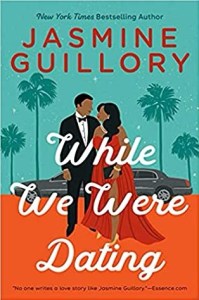
Review: While We Were Dating by Jasmine Guillory

Series: The Wedding Date #6

Two people realize that it’s no longer an act when they veer off-script in this sizzling romantic comedy by New York Times bestselling author Jasmine Guillory.

Ben Stephens has never bothered with serious relationships. He has plenty of casual dates to keep him busy, family drama he’s trying to ignore and his advertising job to focus on. When Ben lands a huge ad campaign featuring movie star Anna Gardiner, however, it’s hard to keep it purely professional. Anna is not just gorgeous and sexy, she’s also down to earth and considerate, and he can’t help flirting a little…

Anna Gardiner is on a mission: to make herself a household name, and this ad campaign will be a great distraction while she waits to hear if she’s booked her next movie. However, she didn’t expect Ben Stephens to be her biggest distraction. She knows mixing business with pleasure never works out, but why not indulge in a harmless flirtation?

But their lighthearted banter takes a turn for the serious when Ben helps Anna in a family emergency, and they reveal truths about themselves to each other, truths they’ve barely shared with those closest to them.

When the opportunity comes to turn their real-life fling into something more for the Hollywood spotlight, will Ben be content to play the background role in Anna’s life and leave when the cameras stop rolling? Or could he be the leading man she needs to craft their own Hollywood ending?


When it comes to romantic contemporaries, I applaud Jasmine Guillory for creating such fantastically real and charming characters. In this sixth installment that features cameos of some fan favourites in her previous novels, While We Were Dating follows Ben Stephens, younger brother of a certain charming Theo Stephens, in his own endeavours with a Hollywood actress he’s working with.

I think the ordinary citizen meets celebrity trope is an interesting one that can either be something I really love or think it completely missed the mark. I unfortunately land closer to the latter with this novel. Maybe it comes down to both the individual characters and their romantic relationship.

Ben was someone who just liked to have a good time with many different women (no judgment), but was always a gentleman to every woman he was with. He avoided issues related to his dad and was seeing a therapist to maintain a healthy balance in the things he’s acknowledged need working in his life (kudos to him for this!). Meanwhile, Anna was just returning to the acting scene after a hard year struggling with anxiety on her own that made working as an actress particularly difficult. She was focused on building her career and didn’t have time for a relationship (that’s cool, I like a focused, ambitious woman). But I didn’t feel like this really made them three-dimensional characters. It was just one aspect of each of them, and it felt kind of bland to only focus on these “defining” traits because that’s what would fill the story and be the issues they’d have to conquer.

However, when these two were together, I can feel the sexual chemistry, for sure. That’s a given. But that doesn’t make for a relationship. They always just wanted to get into bed, and I wanted a bit more for them. Yes, Ben supported Anna when she most needed it, but the way they never quite worked out their issues together for most of the story bothered me.

If you’re a fan of the fake dating trope, that’s also thrown in here, but unfortunately at quite a late time in the novel. I wished we got to this part sooner because it was a little slow going prior to this decision. Perhaps more of the fake dating aspect would’ve made the story pace better, and given the romantic leads more than just chemistry to make their relationship feel real.

The ending was also at a point in time right where I was excited for what was about to happen. I suppose it wasn’t absolutely necessary to include the conversation I so desperately was curious about, but after setting up so much of Ben’s growth arc on that particular issue, I would’ve thought we would get more closure on it.

Regardless of my thoughts on the ending and romance of it, I always appreciate a book that highlights anxiety and mental health. We need to normalize more books discussing mental health, particularly in POC communities. I loved the way it was effortlessly placed in the story and how it impacted both Ben and Anna. People with anxiety definitely need a great support system to help, and I speak this with experience.

While this was probably my least favourite of Jasmine’s books, if you loved some of her other works, especially The Wedding Party, the book may work better for you than it did for me. I wouldn’t write it off completely.

Overall Recommendation:

While We Were Dating definitely featured some of the characters we’ve come to love in Jasmine Guillory’s other books, but I had a hard time loving our MCs, Ben and Anna. The ordinary citizen meets celebrity trope just didn’t work for me here when it felt like the only thing drawing these two together was sheer sexual chemistry and nothing else. Their individual characters felt too one-dimensional, focusing on one major aspect of their character or a current issue they were struggling with. The slower pacing for most of the book also made it hard to feel like continuing at times, but the fake dating trope that surprisingly was thrown in at a later point helped propel me to the end. I wished it was there earlier. The only highlight was the lovely normalization of mental health and therapy written throughout the novel that shows us how important this is, in both good times and the bad. I will still look forward to future books from Guillory but I hope it’ll settle better for me than this one did.