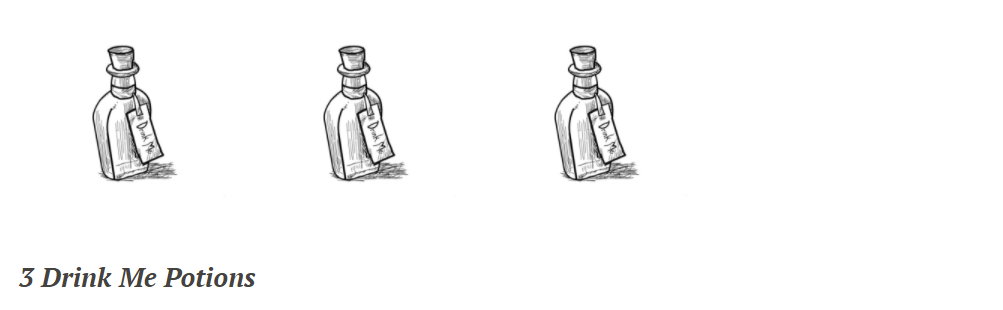
3 star, YA

ARC Review: Clementine and Danny Save the World (and Each Other) by Livia Blackburne

You’ve Got Mail gets a YA twist in this rom-com that spotlights the power of activism and community organizing in the face of gentrification.

Clementine Chan believes in the power of the written word. Under the pseudonym Hibiscus, she runs a popular blog reviewing tea shops and discussing larger issues within her Chinatown community. She has a loyal, kind following, save for this one sour grape named BobaBoy888.

Danny Mok is allergic to change, and the gentrification seeping into Chinatown breaks his heart. He channels his frustration into his internet alter ego, BobaBoy888, bickering with local blogger Hibiscus over all things Chinatown and tea.

When a major corporation reveals plans that threaten to shut down the Mok’s beloved tea shop, Clementine and Danny find themselves working together in real life to save this community they both love. But as they fall hard for this cause—and each other—they have no clue that their online personas have been fighting for years.

When the truth comes to light, can Danny and Clementine still find their happily-ever-after?


Overall Recommendation:

Clementine and Danny Save the World (and Each Other) is an introspective take on Chinese culture and its impact on the diaspora community that settles in a North American city, especially the gentrification of old neighborhoods. The seriousness of the subject matter is routinely balanced out with the levity of tea blogging and many fun facts on the appropriate brewing of tea. I feel more connected to such a story as a Chinese reader, however I do think this story is informational in a way that’ll connect others too.

**Clementine and Danny Saves the World (and Each Other) comes out July 18, 2023**

Thank you Edelweiss and the publisher for this copy in exchange for an honest review

Where shall I begin?

First of all, as a Chinese Canadian reader, I feel pretty close to the subject matter at hand. In this story, Clementine and Danny fight against the impending take over by some big corporate group of a strip mall in Chinatown where they grew up in their town. While it may seem the revamping of an old mall would be ideal for the neighborhood on paper, it really can have negative consequences for the regular patrons and shop owners who actually live in the area.

I will admit I have some mixed and conflicting feelings that I do feel the book fleshes out. Danny, as the son of the owners of Fragrant Leaves, the tea shop in said strip mall, has good insight into the loss of such of corporate takeover. Besides losing out their business and livelihood, what makes up the beating heart of Chinatown will be lost. What exactly is that, you ask?

Chinatown isn’t just made up of the independent stores there. It’s in the elderly who regularly hang out in such places to socialize, play mahjong, and drink some tea. It’s in the hardships the immigrating generation conquered or persevered through the losses to come out on the other side. It’s the memories steeped into a place, the tears and sweat poured out within the confines of old decor and non-modernized technology.

Yes, there is loss here, always, when old is replaced with new. However, there is a flip side, and Clementine brings that into perspective. As a daughter of successful journalists who are considered more upper class, she brings ideas of modernization, Asian fusion and social media connections to promote Asian culture, even in the form of the kinds of tea to drink. She sometimes is idealistic and/or ignorant with her ideas that she posts to her tea blog – reviewing tea sounds like a fun topic actually – but I can also see where she’s coming from. Sometimes, change is necessary to adapt. Culture and tradition have its place, but it’s not traitorous to suggest a middle ground for the next generation in the diaspora to learn and love components of Chinese culture. We are the diaspora, after all. Two identities waging war, fitting in both cultures…or fitting in none.

I didn’t love that Danny made it seem Clementine was always in the wrong for her suggestions. She loved Chinatown, and this was her genuine way to try to bring in more people. Not all ideas work, but her heart was always in the right place. I’m not sure if the author also believes Danny’s POV and pragmatism is always right, but my personal take away is it’s always complicated. Some things I love to keep it the traditional way (drinking pu’erh tea with milk or sugar is a big fat NO), but I also love Asian fusion dishes that certain dim sum places offer.

That brings me to the romance. I honestly didn’t feel it. Danny was so awful to Clementine in her blog’s comment section, even though he didn’t know her to be the anonymous tea blogger. And when some of the things she believed about her Chinese culture differed from what he did, he blew up at her. His apology wasn’t enough, especially when he came across as superior because his parents worked physically hard to keep their store afloat. Are you saying Asians who study hard to afford more white collar jobs and therefore have more money only want to gentrify neighborhoods? He got on my nerves with his self righteousness. So no, I didn’t understand the reality of a romance forming here unless Clem changed all her beliefs to fit his.

The activism part of the story was purely informational, and frankly took up way too much page space. We don’t get to see these two characters anywhere outside of volunteering for the Chinatown nonprofit to save the neighborhood. Besides that they care about their neighborhood, there was little else about them we get to see. Additionally, how all their work played out didn’t really satisfy at the climax which made me wonder why so much time was given to this plot element.

All in all, I like the discussion around Chinese culture, tradition versus modernized “influencer” views, and the impact Chinatown has on those around it. I definitely felt seen with my array of emotions stemming from personal experiences in such places growing up. I didn’t love the ending or the romance but I firmly believe it is still a good read for Asian and non-Asian readers alike to learn from and discuss.

discussion

Let’s Talk Bookish – Clichés

Aria @ Book Nook Bits is the new host for Let’s Talk Bookish! If you aren’t following her yet, good check out her blog and give her a follow!

June 23: Are bookish clichés inherently bad? (Aria)

Prompts: There are lots of clichés that can be found in books, from love triangles to the chosen one to the boy next door. What makes a cliché a cliché? Is a cliché inherently bad to have in a book? Or can an overused storyline or theme be done well? What are your least favorites? Are there any clichés you will tolerate, or even enjoy reading?

Welcome to another week of LTB here at DTRH, everyone! Today’s topic is about clichés and it’s certainly a world full of them. But are they really bad?

A cliché is usually something that is way overdone, or way overdramatized to the point where everyone can see it coming from ten thousand miles away and it’s not even good. I think what kind of makes it a cliché is when the thing is done or written in a certain way that is only for the sake of it following the cliché. Like when protagonists inevitably fall in love with their best friend, in a story where it had no business going there. Or adding a third person randomly out of nowhere just to make a love triangle for no reason.

I don’t think clichés are inherently bad to have in a book, but I definitely think judicious use of them is important. It is important not to just stick them in there just because, but rather to use them to play with expectations. Or at least that’s how I like it done. When I read mysteries and thrillers, it’s always about how the author can play with my expectations and tropes and clichés that tempt me to guess at what’s coming. It’s all about the use of the plot device for sure.

I actually think most people do enjoy a good cliché—when it’s done well. People love a slow burn, or a love triangle, or a boy next door, but not when it’s just jammed in there for the sake of it. I think people actually do like when authors play with these and make them more elaborate, or change up some key factors. That’s what keeps things fun and exciting and not cliché. But let me know if you don’t agree!

I honestly don’t mind any clichés or tropes for that matter. It’s more about how the author uses it to tell the story. If the story relies on something like a cliché to make it a good story…well chances are it’s not a great story. It really is just a tool and they can be good or bad depending on how the author chooses to use them.

How do you all feel about clichés? Yay or nay? Sometimes or never? Let me know in the comments below!

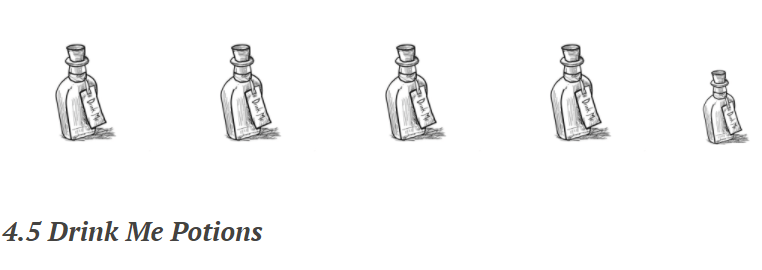
4.5 star, YA

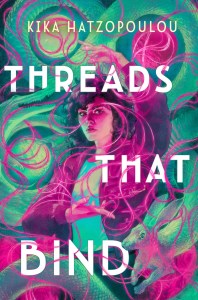
ARC Review: Threads That Bind by Kika Hatzopoulou

In a world where the children of the gods inherit their powers, a descendant of the Greek Fates must solve a series of impossible murders to save her sisters, her soulmate, and her city.

Descendants of the Fates are always born in threes: one to weave, one to draw, and one to cut the threads that connect people to the things they love and to life itself. The Ora sisters are no exception. Io, the youngest, uses her Fate-born abilities as a private investigator in the half-sunken city of Alante.

But her latest job leads her to a horrific discovery: somebody is abducting women, maiming their life-threads, and setting the resulting wraiths loose in the city to kill. To find the culprit, she must work alongside Edei Rhuna, the right hand of the infamous Mob Queen—and the boy with whom she shares a rare fate-thread linking them as soul mates before they’ve even met.

But the investigation turns personal when Io’s estranged oldest sister turns up on the arm of her best suspect. Amid unveiled secrets from her past and her growing feelings for Edei, Io must follow clues through the city’s darkest corners and unearth a conspiracy that involves some of the city’s most powerful players—before destruction comes to her own doorstep.


Overall Recommendation:

Threads That Bind ties together an intriguing take on Greek mythology and the powers ones descendants take on. In a dystopian world that’s fallen to natural disasters like regular flooding, Io’s world is still filled with fear against those who are different: the other-born with gifts from the gods. If you come into this book thinking it’s a super romantic story, I mean, yes, it has romance but it’s super slow burn. What is mostly highlighted and what I loved was the adventurous journey she and her fated soulmate takes to solve the mystery of dead women killing people in her neighborhood. Wholly imaginative in world building and the pieces of the mystery, this book will have you flipping those pages as it surely did for me.

**Threads That Bind comes out June 13, 2023**

Thank Penguin Random House Canada for this copy in exchange for an honest review

I always love a good Greek mythology story but sometimes it seems we focus on very specific gods and figures. One of the many things I loved about Threads That Bind is the different take on Greek gods and the powers their descendants may have. Io Ora, our protagonist, is a moira-born, one who is descended from the Fates and can specifically cut the threads that tie the people, places and things a person loves. Oh, and also their life-thread. This makes her considerably dangerous from an outside perspective, and Io knows well what it means to be other-born and a cutter. Faced with others’ stereotypes and fears, she holds to her own morals and helps those in the poorer district of the city where she lives as a private investigator.

Enter the mystery. While there is definitely romance in this book (I will get back to this later), this was my favourite part. Heavily plot-laden, we follow Io on what was initially a simple cheating case she was hired for that quickly escalates to mysterious deaths caused by a woman with a severed life-thread. In other words, this someone should be dead yet is functioning enough to kill someone else. Partnered with the man she is connected with by a fate-thread, Edei, the action is nonstop and the pieces of the puzzle keep on getting better as we unravel more about these women and their puppeteer.

While the mystery kept the plot exciting and moving quickly, another thing I loved was the world building. The lush descriptions of this dystopian world where neo-monsoons flood the streets often and three moons circle above entice you into this otherworldly experience. The residents are forced to traverse buildings by roof with bridges built in the air, and individual large cities have become their own city-nations as the lands outside are less inhabitable. The existence of so many different other-born showed the vast variety of people and Greek gods present, and how they can use their individual powers in society. I didn’t want to leave the city of Alante, not because it’s a nice place to live, but because it felt so real.

But for my romance lovers out there, the romance here is present but alas quite a slow burn. Fighting against their fate-thread that sometimes draw them closer together – especially in life-threatening situations – Io has been trying and failing at keeping her distance with Edei, emotionally and physically. This book explores the idea of fate versus choice. If they were to fall in love, is it considered real if this was always their destiny? Or is there something more potent about the idea of choosing whom you love? I can’t wait for more in the next book between them, but I definitely felt the pacing of their love story was appropriate given the craziness going on in their city. When one meets a fates soulmate, it wouldn’t do if they fell instantly in love. Now that would feel less real.

The last thing I’ll highlight that I loved was Io’s character arc. Hurt by her overbearing sister’s rules growing up, Io dealt a lot with shame and guilt when it came to her sister’s abandonment two years prior. Add onto the fact that she’s a cutter and normal people generally regard her suspiciously, it’s hard not to want to be everyone’s saviour. Helping out of guilt versus out of kindness are two different things, and Io had a lot of baggage to process in how she lived and what propelled her actions. I liked that she had flaws, realistic ones from her upbringing, but she also carried morals that could be molded when faced with new knowledge and experience. She’s the kind of flawed protagonist I like. Not morally gray but not self righteous in their inability to admit wrong. I look forward to seeing her journey continue in book 2. It honestly can’t come out fast enough!