
discussion

Let’s Talk Bookish – Does Having a Positive Message Automatically Make a Good Book?

Letโ€™s Talk Bookish is a weekly meme, hosted byย Rukky @ Eternity Booksย &ย Dani @ Literary Lion,ย where they discuss certain topics, share their opinions, and spread the love by visiting each othersโ€™ posts.

JULY 23: DOES HAVING A POSITIVE MESSAGE AUTOMATICALLY MAKE A BOOK GOOD? (RUKKY)

Prompts:ย If you see good representation in a bad story, do you still consider it a good book? Are you more lenient with an โ€˜okayโ€™ book if it has an important message? How do you deal with a book that you disliked/hated if you think it still has an important theme? Do you think we should actively recommend books with positive/important messages even if we personally didnโ€™t like the book?

Welcome back everyone! I can’t believe it’s almost the end of July already, time is seriously passing by so quickly, feels like summer is basically over. Today’s topic is thought-provoking, as I usually don’t rate books as “good or bad” right off the bat unless its egregiously out of line. Let’s explore the prompts that our lovely host Rukky has set out for us!

If you see good representation in a bad story, do you still consider it a good book?

For me, that’s a nope. Yes it’s great to see good representation anywhere. Is it enough to salvage a terrible book? Probably not. Of course, this all depends on many factors than just the representation and the story. But for me, it’s almost like what’s the point of having great representation if the story is so bad that no one wants to read nor promote it? Who will get to see and read about the good representation? So it’s a no from me for this one.

Are you more lenient with an โ€˜okayโ€™ book if it has an important message?

This question on the other hand, I would have to say I do tend to be more lenient. I might even try harder to look for excuses reasons as to why it might be a good book over an “okay” one. Sometimes I think the moral of the story (or even just the journey) can truly be a very critical one, and therefore I might try to promote it even if it wasn’t the best book. That being said, I don’t run into these kinds of books too often, so I’m speaking more from a hypothetical standpoint.

How do you deal with a book that you disliked/hated if you think it still has an important theme?

I…fortunately don’t think I have run into this problem yet. I think the most is that I thought there could’ve been improvements, but since the book still had a good message and theme, I’ll give it a pass for not being the most superb of writing. Besides, writing style, etc. could also be subjective, right? Whereas the importance of some theme cannot be denied nor is it up for debate. Hypothetically speaking for a book I disliked/hated though… I’d have to say that I’d probably be honest with it. Like yes the book does seem to explore and talk about an important theme but I personally didn’t like it for x and y reasons. I think it would probably be best to acknowledge the shortcomings while still being honest with its strengths.

Do you think we should actively recommend books with positive/important messages even if we personally didnโ€™t like the book?

Now this is an interesting one. For me I think the keyword here is “actively”. It would be easy enough for me to passively say “seems like it had a good message” without putting too much other emphasis on it. I feel like it might just be better to acknowledge such books when it comes up, but I think it would be even better to find books that you did like with a good message to promote. It’s always more effective to recommend and promote books that you personally enjoyed – people can definitely tell. The “important message” would be weaker if you are only half-heartedly promoting it, and therefore might lose value.

What do you all think though? Is the message of a book that important? Or just something trivial?


4 star, YA

Review: Love & Olives by Jenna Evans Welch

Series: Love & Gelato #3

Santorini felt like an island holding its breath. As if it were keeping in a secret…

Liv Varanakis doesnโ€™t like to think about her father much, which makes senseโ€”he fled to Greece when she was only eight, leaving her with just a few painful memories of their shared love for the lost city of Atlantis. So when teenage Liv suddenly receives a postcard from her father, who explains that National Geographic is supporting a documentary about his theories on Atlantisโ€”and asks if she will fly out to Greece and helpโ€”Liv is less than thrilled.

When she arrives in gorgeous Santorini, things are just as awkward as she’d imagined. There are so many questions, so many emotions that flood to the surface after seeing her father for the first time in years. Liv doesnโ€™t want to get sucked back into her father’s world. She also definitely doesnโ€™t want Theo, her fatherโ€™s charismatic so-called protรฉgรฉ, to witness her struggle.

Even so, she can’t help but be charmed by everything Santorini has to offerโ€”the beautiful sunsets, the turquoise water, the sun-drenched villages, and the delicious cuisine. But not everything on the Greek island is as perfect as it seems. Because as Liv slowly begins to discover, her father may not have invited her to Greece for Atlantis, but for something much more important.


What was lost is now found.

A slightly different take from her other travel inspired novels, Jenna Evans Welch takes us to the beautiful island of Santorini in this latest novel, Love & Olives. While we still get the chance to explore around and โ€œseeโ€ the different tourist attractions here, itโ€™s a lot less focal to the story. The main attraction is this: a hunt for the lost city of Atlantis.

Thatโ€™s right, folks. They are searching for Atlantis. Livโ€™s father abandoned her when she was a child to go in search of his lifelong dream of Atlantis, and now she finds herself on Greek soil for the first time to join her father in his excursion. Sounds like thereโ€™s bound to be lots of intense emotions flying around on this vacation, hmm?

Continue reading “Review: Love & Olives by Jenna Evans Welch”
4 star, YA

Review: Night of the Dragon by Julie Kagawa

Shadow of the Fox #3

Master storyteller Julie Kagawa concludes the enthralling journey into the heart of the fantastical Empire of Iwagoto in the third book of the Shadow of the Fox trilogy. As darkness rises and chaos reigns, a fierce kitsune and her shadowy protector will face down the greatest evil of all. A captivating fantasy for fans of Sabaa Tahir, Sarah J. Maas and Marie Lu.

Kitsune shapeshifter Yumeko has given up the final piece of the Scroll of a Thousand Prayers in order to save everyone she loves from imminent death. Now she and her ragtag band of companions must journey to the wild sea cliffs of Iwagoto in a desperate last-chance effort to stop the Master of Demons from calling upon the Great Kami dragon and making the wish that will plunge the empire into destruction and darkness.

Shadow clan assassin Kage Tatsumi has regained control of his body and agreed to a true deal with the devilโ€”the demon inside him, Hakaimono. They will share his body and work with Yumeko and their companions to stop a madman and separate Hakaimono from Tatsumi and the cursed sword that had trapped the demon for nearly a millennium.

But even with their combined skills and powers, this most unlikely team of heroes knows the forces of evil may be impossible to overcome. And there is another player in the battle for the scroll, a player who has been watching, waiting for the right moment to pull strings that no one even realized existedโ€ฆuntil now.


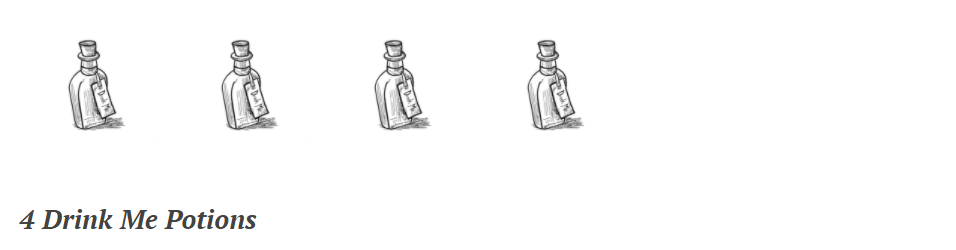
The final conclusion to the Shadow of the Fox series, and boy was it a wild ride to its crazy finish. Andge and I both rate it about a 4 Drink Me Potions here. Full of rich Japanese lore (all the books had this), and the climactic finish to the whole journey, it certainly was a dramatic ending. This was the final culmination of all the characters we have met, and the final ending for all of them.

Night of the Dragon is the last book in the Shadow of the Fox trilogy. In this final part, Yumeko and her motley crew are on the last part of their journey to the summoning site. Of course, the evil Master of Demons, Genno, will already be waiting for them there, with blood magic fueling an entire army to prevent Yumeko from stopping him making his wish. Certain to sustain many losses in the journey, she nonetheless bravely ventures forth to prevent the world from falling into darkness under Genno’s rule.

This was quite a finish to this epic tale. I would say the biggest strength is the use of Japanese lore: the samurai and their code, the famous greater and lesser kami spirits, and even yokai (demons) from their lore as well all making an appearance. Creatures of all kinds felt like they were themselves being summoned from Japanese scrolls into this novel. I found that extremely enjoyable and it was awesome to have a closer look into these Japanese historical myths and stories. It goes beyond just the regular surface level concepts that everyone knows and the research really added an extra depth in the story to sink us in.

Continue reading “Review: Night of the Dragon by Julie Kagawa”