When everything is lost, it’s our stories that survive.
How do we weather the end of things? Cloud Cuckoo Land brings together an unforgettable cast of dreamers and outsiders from past, present and future to offer a vision of survival against all odds.
Constantinople, 1453: An orphaned seamstress and a cursed boy with a love for animals risk everything on opposite sides of a city wall to protect the people they love.
Idaho, 2020: An impoverished, idealistic kid seeks revenge on a world that’s crumbling around him. Can he go through with it when a gentle old man stands between him and his plans?
Unknown, Sometime in the Future: With her tiny community in peril, Konstance is the last hope for the human race. To find a way forward, she must look to the oldest stories of all for guidance.
Bound together by a single ancient text, these tales interweave to form a tapestry of solace and resilience and a celebration of storytelling itself. Like its predecessor All the Light We Cannot See, Anthony Doerr’s new novel is a tale of hope and of profound human connection.
I recently read this book for my book club, and it was initially supposed to have been picked from a “list of best books.” However, this style of book just misses the mark for me, though I can understand why people enjoy it.
Cloud Cuckoo Land is a tale that is woven around a translated story. We follow five different characters and their point of views, and we really do get to meet all the characters and their whole upbringing. Each character is set in their own unique circumstances, with the theme of stories tying them together. Each character arc is developed over the book, and their stories are woven together in the end in a rather unique and refreshing way.
Find a gateway to the underworld. Steal a soul out of hell. A simple plan, except people who make this particular journey rarely come back. But Galaxy “Alex” Stern is determined to break Darlington out of purgatory―even if it costs her a future at Lethe and at Yale.
Forbidden from attempting a rescue, Alex and Dawes can’t call on the Ninth House for help, so they assemble a team of dubious allies to save the gentleman of Lethe. Together, they will have to navigate a maze of arcane texts and bizarre artifacts to uncover the societies’ most closely guarded secrets, and break every rule doing it. But when faculty members begin to die off, Alex knows these aren’t just accidents. Something deadly is at work in New Haven, and if she is going to survive, she’ll have to reckon with the monsters of her past and a darkness built into the university’s very walls.
Thick with history and packed with Bardugo’s signature twists, Hell Bent brings to life an intricate world full of magic, violence, and all too real monsters.
Ahh, the awaited sequel that I finally got to. Unfortunately, it wasn’t as exciting as I had hoped it would be. Still, that doesn’t mean I won’t be picking up that sequel immediately when it comes out!
Hell Bent is the follow up story following our protagonist, Alex Stern, as she journeys to hell (and hopefully back) to rescue our old favourite, Darlington. An incredibly dangerous journey, and one well-hidden, of course. With no one left at her disposal to risk her dangerous journey, and people wanting to stop her at every turn, will Alex be able to succeed in bringing back her long-lost mentor?
The characters for the most part were still excellent, as usual. I like that they all have this very human quality, since they don’t always perfectly fit their trope, making them more complex and nuanced characters. There aren’t too too many characters present, so it was easy to have a deeper dive into their characters. Particularly Alex and Darlington are heavily heavily focused on in this book, unsurprisingly. Some characters make a reprise from the first book, but overall I didn’t find them to be too important.
Ah, the plot. This is where I really struggled. I don’t think it was bad necessarily, but I feel like there wasn’t as much happening as I had hoped. It really blends in with many other books that I have read that have a similar theme, and didn’t really stick out as anything that special. There were also a couple of plot points that I’m not sure were totally necessary or that helpful in building the story. Overall I thought the plot was a bit weak, but this may be due to my high expectations based on the first book.
Speaking of my expectations, the world-building was also lacklustre in my opinion. While Ninth House had all the happenings of Yale and adjusting to the secret society life, this book really only had Alex tunnel-visioning on saving Darlington. There is a lot that happens and Alex does travel around, but in general it felt more like subsidiary little (and I mean little) plot lines to continue her on her quest. It didn’t feel as expertly woven together as I have come to expect to really make this magical world come to life. But again, this could just be my overly high expectations.
Overall, I wouldn’t say I was disappointed per se, but I certainly thought the book would be written differently. So I would just say it was different from what I expected, not that it greatly fell short of an objective standard. I think I really was just biased here by my expectations, so take that with a grain of salt for sure. After all, I still am looking forward to the next book!
Overall Recommendations
Hell Bent is the second book in this series following Alex Stern in her magical secret society at Yale. In this book Alex attempts to enter the underworld to rescue her long-lost mentor who had been taken by the shadows. All alone in her efforts as she is stripped of power and privilege, will Alex be able to finally be able to rescue Darlington? The story is heavily focused on this quest, so if you like adventure and heist, you won’t be disappointed with this sequel.
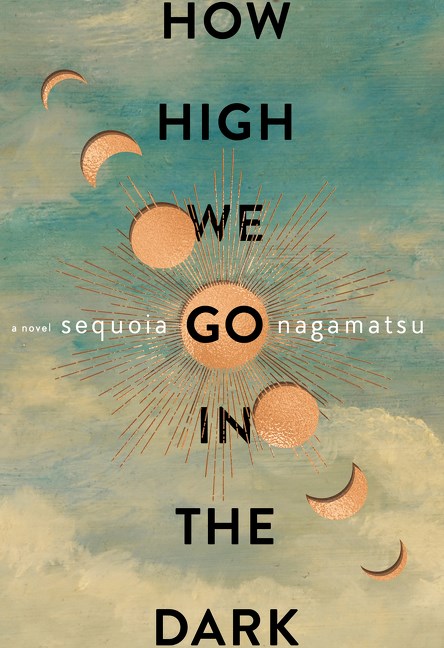
For fans of Cloud Atlas and Station Eleven, a spellbinding and profoundly prescient debut that follows a cast of intricately linked characters over hundreds of years as humanity struggles to rebuild itself in the aftermath of a climate plague—a daring and deeply heartfelt work of mind-bending imagination from a singular new voice.
Beginning in 2030, a grieving archeologist arrives in the Arctic Circle to continue the work of his recently deceased daughter at the Batagaika crater, where researchers are studying long-buried secrets now revealed in melting permafrost, including the perfectly preserved remains of a girl who appears to have died of an ancient virus.
Once unleashed, the Arctic Plague will reshape life on earth for generations to come, quickly traversing the globe, forcing humanity to devise a myriad of moving and inventive ways to embrace possibility in the face of tragedy. In a theme park designed for terminally ill children, a cynical employee falls in love with a mother desperate to hold on to her infected son. A heartbroken scientist searching for a cure finds a second chance at fatherhood when one of his test subjects—a pig—develops the capacity for human speech. A widowed painter and her teenaged granddaughter embark on a cosmic quest to locate a new home planet.
From funerary skyscrapers to hotels for the dead to interstellar starships, Sequoia Nagamatsu takes readers on a wildly original and compassionate journey, spanning continents, centuries, and even celestial bodies to tell a story about the resiliency of the human spirit, our infinite capacity to dream, and the connective threads that tie us all together in the universe.
A friend suggested this one to me, and it wasn’t at all what I was expecting. However, what this book is is a social commentary of society, set during a pandemic where euthanasia even becomes the norm, and “elegy hotels” among other new trends. This is a collection of short stories, that are all eventually quite tied together, which was a neat exploration of a dystopian world.
How High We Go in the Dark is a sci-fi novel that takes place in a world ravaged by a deadly virus from the past. The world quickly falls apart, and the limits of humanity are really stretched to the absolute thinnest. Taking place as a collection of short stories, we get the POV of many different people on Earth as they navigate the world breaking apart, including finally a journey into deep space in search of a livable world.
The characters were definitely a strong point of this book. And the way the characters are tied together, despite how many of them they are, it’s surprisingly not too difficult to keep track of all of them. A lot of characters are explored quite deeply even within the short story allocation they have, and I felt that overall this was well done. When the characters were more and more tied together through each sequential short story, I also felt that this was well done, and really gave a general sense of continuity through the stories.
Unfortunately, I felt that the plot could be a little bit weak at times. I suppose this story really is much more about the people and how they deal with the pandemic and the world completely falling apart. That being said though, the order of the timeline of the stories was not something I fully expected, and I found it confusing at moments when I was wondering where and when I was. To me it wasn’t super clear, but perhaps it was clearer to other readers. There was also a big climax at some point which resolved wonderfully, and I felt like the whole book could basically have ended there…but it didn’t. The final short stories after that point felt like it dragged on for me, since I feel like everything was already set and given at that point, and the rest was just to explain some gaps.
The book certainly has interesting views and insights onto what happens when the. very seams of society are torn apart by something out of their control, not unlike our own real-life pandemic, just even worse. I certainly enjoyed some of the commentary, and also imagined what I would do given the same situation. Though there were many extra elements of sci-fi and “extended science” that I couldn’t quite get behind just given my own knowledge of science. Taking all those with a grain of salt though, it was interesting what sort of ethical and moral dilemmas come up when faced with difficult situations.
Overall Recommendations
How High We Go in the Dark is a collection of short stories, revolving around a world ravaged by an ancient virus that becomes nigh unstoppable. Taking place through many different perspectives, characters of all sorts of different lives come to grapple and deal with the effects of a pandemic that the world never recovers from. Certainly haunting and chilling at some points, there are also elements of hope and humanity that can never be extinguished. Overall it is a journey through time, of recovery and desperation, and what mankind pushed to its very limits can be seen to do.


 Down the Rabbit Hole