
2.5 star, YA

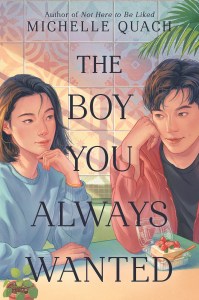
ARC Review: The Boy You Always Wanted by Michelle Quach

Francine always has a plan. Ollie wants no part of it.

Francine loves her grandfather, but their time together is running out. He has one final wish: to see a male heir carry on the family traditions. Francine knows his ideas are outdated, but she would do anything for him. Her solution? Ask Ollie Tran, a family friend (and former crush, not that it matters), to pretend to be ceremonially adopted and act like the grandson A Gūng never had.

Ollie generally avoids the odd, too blunt (and fine, sort of cute) Francine, whose intensity makes him uncomfortable. So when she asks him to help deceive her dying grandpa, Ollie’s not down. He doesn’t get why anyone would go to such lengths, even for family. Especially with a backwards (and sexist, Ollie keeps stressing) scheme like this.

Francine, however, is determined to make it happen, and soon Ollie finds himself more invested in her plan—and in her—than he ever thought possible. But as the tangled lies and feelings pile up, Francine must discover what exactly she needs for herself—and from Ollie. Because sometimes the boy you always wanted isn’t what you expected.


Overall Recommendation:

With deep insight into family responsibilities in an Asian household, The Boy You Always Wanted poses the question of love for our family members while struggling with cultural viewpoints that are outdated in today’s society. I find this read was particularly impacting because I 100% relate to the premise, however, for those who aren’t Asian or their families are not like this, the story can still be fun with the cultural elements an insight into the workings of the Asian diaspora.

**The Boy You Always Wanted comes out August 1, 2023**

Thank you Edelweiss and the publisher for this copy in exchange for an honest review

When it comes to Asian representation in YA, you know I’m there. The premise of The Boy You Always Wanted hit close to home for myself and the author, and perhaps many of us who know what it feels like to be a girl in a culture where it’s seen as secondary.

Francine’s grandpa is dying but to deal with the grief of impending loss, she wants to make him feel at peace with what he’s leaving behind. I really loved this aspect of the story. I felt seen in this book, navigating Asian experiences in a modern world. While I understand people may come into this book with expectations of sexism resolved and people standing up for themselves, it’s not always quite so simple.

For the author and myself and any of you who knows what it feels like to be seen as less than in this way, the resolution isn’t something that may be present in the lifetime of those we love. I appreciated how Michelle asked that question throughout: how do we reconcile our deep love for our family members with the sexist and outdated views they carry in this modern society? I see it in myself sometimes as the granddaughter next to my younger brother. I see it in my mother’s family, to have 5 kids just so grandpa can ensure there is a son born into the line. I see it in my father’s family, where I’m treated slightly better as my father’s daughter than my cousin as my aunt’s daughter. How do I balance the love I have for my grandparents and the love I know they have for me even though certain comments don’t sit well? There’s no easy answer, and for that I appreciate it wasn’t just brushed aside so easily with a fix-all solution. Sometimes, there really is none. We can only hope to do better by teaching the next generation better.

That being said, while I loved the cultural aspects and deeper thought behind the story, everything else was not as great. I couldn’t get behind Ollie’s extremely dislikable character. He was awful to Francine, up front and in his thoughts since we get his POV. His redemption wasn’t enough, especially with how rushed the romance felt on his part. He wasn’t a terrible person as he did do his best to play the male heir part for Francine’s grandpa, but he just wasn’t very mature. I liked Francine well enough, even all the “quirks” that bugged Ollie and the others. I just don’t feel their romance worked as he didn’t respect her enough for so long. It was like the excuse boys pick on girls because they like them, not because they’re simply bullies.

The pacing was also a little slow with not much build. The climax wasn’t as crazy as I anticipated but at the same time was oddly predictable once the “twist” from left field was made known to us. I will reiterate that this story isn’t just for Chinese Americans or Chinese Vietnamese (which holds a dear spot in my heart). There’s lots that can be learned from such an intimate look at filial duties and family dynamic here, however, what propels you to finish it may be stronger if there is more of a personal connection like there is with me.
2.5 star, YA

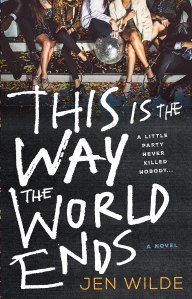
ARC Review: This is the Way the World Ends by Jen Wilde

You are cordially invited to spend one fateful night surviving an elite private school’s epic masquerade ball

As an autistic scholarship student at the prestigious Webber Academy in New York City, Waverly is used to masking to fit in—in more ways than one. While her classmates are the children of the one percent, Waverly is getting by on tutoring gigs and the generosity of the school’s charming and enigmatic dean. So when her tutoring student and resident “it girl” asks Waverly to attend the school’s annual fundraising Masquerade disguised as her, Waverly jumps at the chance—especially once she finds out that Ash, the dean’s daughter and her secret ex-girlfriend, will be there.

The Masquerade is everything Waverly dreamed of, complete with extravagant gowns, wealthy parents writing checks, and flowing champagne. Most importantly, there’s Ash. All Waverly wants to do is shed her mask and be with her, but the evening takes a sinister turn when Waverly stumbles into a secret meeting between the dean and the school’s top donors—and witnesses a brutal murder. This gala is harboring far more malevolent plots than just opening parents’ pocketbooks. Before she can escape or contact the authorities, a mysterious global blackout puts the entire party on lockdown. Waverly’s fairy tale has turned into a nightmare, and she, Ash, and her friends must navigate through a dizzying maze of freight elevators, secret passageways, and back rooms if they’re going to survive the night.

And even if they manage to escape the Masquerade, with technology wiped out all over the planet, what kind of world will they find waiting for them beyond the doors?


Overall Recommendation:

This is the Way the World Ends delivers on the diversity front in its characters but lacks the emotional connection to them. Between certain flashbacks and a plot about the world literally ending, there wasn’t enough time focused on any singular thing. There was a lot of potential but perhaps didn’t come through in a way I had anticipated while rooting for Waverly and co.

**This is the Way the World Ends comes out May 9, 2023**

Thank you to the publisher and Netgalley for this copy in exchange for an honest review

This book is definitely reminiscent of the dystopian era of YA, although it starts off in a world similar to ours. You know going into the book that things aren’t as they seem, and the world may be on the brink of big changes that will impact everyone in a devastating manner. How this happens though? Now that’s the mystery, and it does unfold in an intriguing way.

Set in a prestigious New York school, we follow Waverly, one of few students who attend based on scholarship and merit instead of wealth and connections. For the most part, I liked her as a protagonist. She’s unique and stands out among the YA crowd full of heroines that all seem so…one noted. She’s autistic and deals with the world in a slightly different way than others. But that doesn’t necessarily define her, just a fact that explains how her POV makes sense.

There’s also a heavy emphasis in chronic illness among the secondary characters. From MS flares to the need for a cane with mobility, diversity is most definitely present. While it’s tempting to feel like the author just wants to add “diverse characters” into the story, I don’t feel that is the case here. These aren’t just token characters to check off a box and feel good about yourself. Their disabilities or health struggles are a part of who they are and play more of a role in the story than an adjective to describe a person.

That being said, I struggled the most with this story when it came to really connecting with the characters. They seem great and all, but why should I care? I know, it sounds harsh, but a part of me felt very disconnected from them, which isn’t great when these characters are on the run and trying to escape pending doom and death.

What the book excelled at more was laying out the end of the world plot. It felt like a quick read at times because I was anticipating with Waverly the puzzle pieces we needed to put together to understand what’s happening. The end of the world hadn’t happened yet, unlike most dystopians that already drop you in a devastated world, so it was cool seeing the transition.

Unfortunately, the plot dragged only in its flashback scenes. They’re there to add context for Waverly’s relationship with her ex, Ash. I liked Ash well enough but I couldn’t determine whether I was rooting for their present relationship or not from what little information we are presented with about her. Most of the happy parts of their relationship occurred in the past so I never got to truly feel them falling in love. In fact, the romance almost deterred some of the action in the story with the page time it was given.

Without giving away anything, I’ll say that I’m not sure how I feel about the ending. It both felt like the appropriate place to leave it while also making me wish for more. That may be a good indicator for a book. It makes you both want more and somewhat satisfied with the direction it did go in. For a debut novel, This is the Way the World Ends had some bumps but it also had some things I enjoyed for a quick read.

2.5 star, YA

ARC Review: Someone Is Always Watching by Kelley Armstrong

Blythe and her friends—Gabrielle, and brother and sister Tucker and Tanya—have always been a tight friend group, attending a local high school and falling in and out of love with each other. But an act of violence has caused a rift between Blythe and Tucker . . . and unexpected bursts of aggression and disturbing nightmares have started to become more frequent in their lives. 

The strange happenings culminate in a shocking event at school: Gabrielle is found covered in blood in front of their deceased principal, with no memory of what happened. 

Cracks in their friendship, as well as in their own memories, start appearing, threatening to expose long-forgotten secrets which could change the group’s lives forever. How can Blythe and her friends trust each other when they can’t even trust their own memories?


Overall Recommendation:

Someone Is Always Watching is more of a dystopian than a mystery as we dig into the secrets buried inside of a group of teenagers who start noticing disturbing behaviour among themselves. It’s different than what I would have thought the story would be about initially. While that’s not inherently a bad thing, I didn’t connect well with any of the characters, and the overall mystery was less central to the plot than expected. I think the world of Kelley Armstrong but this wasn’t among my favourites from her.

**Someone Is Always Watching comes out April 11, 2023**

Thank you Netgalley and the publisher for this copy in exchange for an honest review

I’ve been a Kelley Armstrong fan for a long time now, having the pleasure of meeting her when I was in high school when she started writing YA novels. With that said, I thought I had a fairly good understanding of her writing styles and genres.

This book changed things. And I’m not entirely certain how I feel about it even after waiting a little while to write this review.

We follow mainly one girl, Blythe, in this story, but we’re immediately immersed in this friend group that grew up together in a small town due to their families’ connections to the organization that employs them all. I’m not sure about you, but immediately that raises all sorts of red flags in my head. Perhaps I’ve read far too many dystopians, but this is precisely more the genre this book lands in than the mystery of what is happening with these teenagers.

I won’t say that the “mystery” relating to what’s been going with Blythe and friends, their loss of memory of strange occurrences and direct involvement in suspicious deaths/behaviors, was all too hard to guess. The only thing that may have took me slightly by surprise is the identity of who has been leaving Blythe cryptic messages about her and the others’ past. It definitely got more predictable as the story went along but that was one intriguing aspect of the story.

For a shorter length book, the pacing did leave me wanting more. It wasn’t as suspenseful as I had hoped because the mystery wasn’t all too hard to predict. But what makes a book beyond its plot are the characters, especially if the plot didn’t drive the story as much as one would expect. Would I say the characters were beloved in any way then? No, unfortunately I really can’t.

Right off the bat we are introduced to Blythe and Tucker, their younger selves, as individuals with a darker side who wants to cause a little destruction. Fast forward to their older selves, Blythe has tried hard to rein in her darker side and Tucker has a reputation for being dangerous, even from the grown ups around him. I’m all for having well-rounded morally gray characters but it was hard to find the sides of Blythe and Tucker to love.

The others in the friend group we follow sometimes but not in depth. Tanya doesn’t display much emotion, and is even characterized to have sociopathic tendencies. The only person she can fathom loving is her brother, Tucker. Sure, that’s great at least, but doesn’t inspire me to want to know her better. Gabrielle was the first one of them to display a loss of control and acting erratically so knowing her normal self wasn’t really something that was explored.

Then it seemed that a romance was being pushed between Blythe and Tucker. I’m sorry, but this forbidden relationship felt too forced in some ways. Sure, they may have both loved one another since they were young but could not be together because Tucker was “dangerous”. However, making their love more of a central piece of the story didn’t make one difference to me. So much of the focus was on what is currently happening to them and their search for the truth that having this romance appear felt disconcerting. I love romances in stories but this was more of an add-on. And all I could feel was apathy.

All this being said, I love Kelley’s stories regardless of my lack of enthusiasm for this one. Perhaps my expectation coming in was for the mystery to be more central and shocking. If you’re new to Kelley’s writings, I will say you should come in open minded, and this book is just one among the breadth of her stories in the YA sphere.