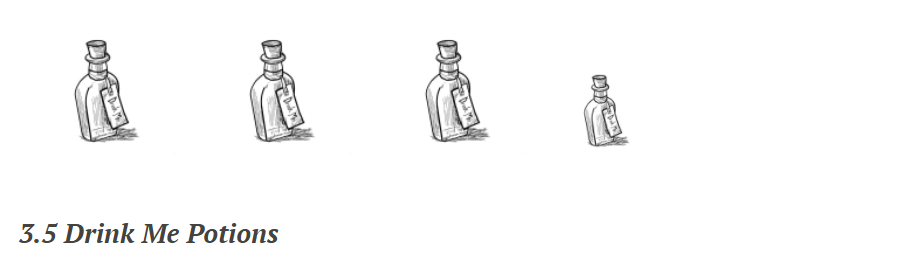
3.5 star

Review: The Memory Police by Yoko Ogawa

On an unnamed island off an unnamed coast, objects are disappearing: first hats, then ribbons, birds, rosesโ€”until things become much more serious. Most of the island’s inhabitants are oblivious to these changes, while those few imbued with the power to recall the lost objects live in fear of the draconian Memory Police, who are committed to ensuring that what has disappeared remains forgotten.

When a young woman who is struggling to maintain her career as a novelist discovers that her editor is in danger from the Memory Police, she concocts a plan to hide him beneath her floorboards. As fear and loss close in around them, they cling to her writing as the last way of preserving the past.

A surreal, provocative fable about the power of memory and the trauma of loss, The Memory Police is a stunning new work from one of the most exciting contemporary authors writing in any language.


This is one we chose for our book club, and I was certainly intrigued through the synopsis. The book didn’t play out as I expected though, which isn’t necessarily a bad thing, but I may enjoy it more reading it a second time around. Stay tuned for exactly why that was.

The Memory Police takes place on an unnamed island where things “disappear” at random intervals, each time being erased completely from the memories of its inhabitants…except from some select individuals. The Memory Police strictly enforce the disappearances, and particularly hunt down these individuals. Our protagonist faces her fair share of struggles against the Memory Police, all while battling the power the disappearances.

I have to start with the plot first. I just wasn’t expecting it. I don’t want to spoil it, but this story is much more about the power of memory and what it would mean to forget certain things, rather than actually following the story of the characters. The characters were certainly good, and I got invested wondering what would happen to them. However, I think the story is a bit more esoteric than that and kind of forces you to think about it more from an outside perspective. It’s a bit of a story similar to 1984 and I can see why it would have an impact on how you might view the world.

There were very few characters, but like I said, it was really more about how the island and its disappearances affect the characters, especially the difference between those that no longer remember, and those that remember. The difference is stark and tragic, and really makes you consider and ponder the power of memory. The main character is also a writer and we get more and more glimpses of excepts of her novel, which I think are a very interesting reflection of the situation at hand too. You can decide for yourself how the “story” plays into the context of the whole story.

I think the book sends a really strong message, and it certainly gives me a lot to think about. But for some reason I can’t give it a higher rating, but mostly because I expected a little bit more from the story, I think. I can’t quite place my finger on it, but I just wasn’t satisfied with the ending and how things tie up. I think it made sense, and it wasn’t left open, but the way the story was heading made it feel like it would head in a different direction. I feel like the story and message could’ve been advanced differently and have been a more interesting plot while still maintaining the message, so perhaps that is my gripe with it. But I think overall it was worth reading and I recommend it if only for that broadening of perspective.

Overall Recommendations

The Memory Police revolves around a mysterious island where objects can disappear at any time, slowly fading from memory until all that is left is an empty gap. Simultaneously everyone forgets…except some people. Those are the people hunted by the Memory Police with unrelenting stringency. Follow the story of the protagonist and her few friends as she navigates life with more and more objects disappearing from her island. The book has a very strong message about the power of memory, and just what value and worth is stored in memory, and also the trauma of loss, particularly memory loss.

discussion

Let’s Talk Bookish – Do Book Titles Matter?

Aria @ Book Nook Bitsย will be the new host for Letโ€™s Talk Bookish! If you arenโ€™t following her yet, good check out her blog and give her a follow!


October 21: Do book titles matter? (Hannah @ Hannahโ€™s Library)

Prompts:ย How much do book titles matter? Have you ever read or not read a book based on the title alone? Do you like long or short book titles better? Do you think the title has to connect to the story in some way? What are some of your favorite book titles?


Welcome to another week of LTB here at DTRH! Today’s topic is certainly a good one and I’d love to hear what you all think about it. We’ve all heard about don’t judge a book by its cover, but how much do the titles actually matter/form part of that judgment?

I think book titles do matter, but how much can be hard to say. I would say it doesn’t make or break a book but a good title really does wonders for a book. It wouldn’t destroy a great book nor would it save a bad book. That being said I really do think even a great book can be improved by a great title! Titles are part of the cover and it just forms part of your initial impression, and there’s just no getting by that, even if we try not to be biased.

I personally have not let a title affect whether I read it or not. But that isn’t to say it didn’t subconsciously affect what grabbed my attention at the book store. Of course, if someone recommended me a book and it had kind of a strange title, I don’t think that would stop me from reading the book. The title is just a title; the content of the book is still really what matters the most.

I think short or long titles can work well, but it really depends. I think generally shorter ones (3-4 words, maybe) tend to be more “catchy” and easier to remember. I tend to prefer them but something like One Flew Over the Cuckoo’s Nest also just has a bit of a ring to it. I’ve never thought “I wish that title was shorter” but I certainly know that my own attention is really caught when there is a short and sweet title that really intrigues me.

Ideally, for me, I like when the book titles relate to the book in some way. It doesn’t have to be the plot, it could even be something intangible. But I think I do always reflect on the book title after reading the book, and I think it also helps me to remember what happened in the book years in the future, so it really helps when the title really does have something to do with the book. I have read some books where I felt like the title was completely irrelevant, and that is always a little bit off-putting. I have even read a book recently where the book title was casually thrown into the last few pages of the novel, as an essentially throwaway line and I was like…is that the only reference to the title? Strange.

I love titles like Verity, Six of Crows, Caraval, The Binding, or other rather intriguing titles that really make me want to read the book and find out why the author picked that as the title. If you haven’t read any of the above titles, I certainly recommend all of them!

What about you all? I’d love to hear some of your favourite titles!

discussion

Let’s Talk Bookish – Writing Whatever You Want?

Aria @ Book Nook Bitsย will be the new host for Letโ€™s Talk Bookish! If you arenโ€™t following her yet, good check out her blog and give her a follow!

October 14: Can you write whatever you want? (Anna)

Prompts: Can bloggers just write whatever they want? Or are there boundaries they should respect even on their own platform? If a blogger is called out for something they post, are they obligated to respond?


Welcome back to another week of LTB here at DTRH everyone! Today’s topic is quite interesting, and something that I didn’t immediately have an answer too. As a relatively new blogger myself, I don’t feel like I have seen enough iterations of the community to know what may hold true or not over time, but I’d love to hear what the rest of you out there feel or instinctively think about this!

I suppose I do have an immediate thought that yes it’s your own personal blog and you can realistically write almost anything you want. That being said, because it’s not just a personal diary, in which I think you really could have no limits on what you write, a blog is something public and to be shared and read by the community (with that intention in mind!). In that case, I feel like just naturally there should be some restrictions, are at the very least, considerations before posting just whatever you want.

I think as a personal blog, we should definitely allow a large degree of freedom, and after all, it is really more like an open discussion forum where we are free to express our opinions. That being said, I definitely wouldn’t support anyone spreading hate speech or anything like that on such a public forum. I have not seen any of that around in our community, so I don’t think this will be an issue, but I am grateful all the same.

Definitely any opinions on books, and other bookish content, etc., should have full disclosure. I mean, that is the point of a blog, is it not? As for other content…I think people should use their best discretion as to what they do or do not say. One thing to remember is that the blog is an extension of yourself, and people will judge (or at least realize) more about your character based on what they see and read. In that case, it may just be best not to express things that you wouldn’t say in public, for example. But I would leave it up to each person’s discretion as to what they want to divulge and share about themselves rather than set “rules and boundaries” in the abstract.

I have never personally seen someone “called out” for something on their blog, though I can imagine it happening easily over controversial topics or books. I don’t think anyone is obligated to reply, but I can see many reasons why one may want to defend or address their own opinion. Sometimes posts or comments just don’t age well, and we can’t always put the full blame on the writer (though there should likely still be some accountability).

What do you all think about the freedom of a blogger to express their own opinions? Unlimited free rein over the internet? Or maybe something a little bit more subdued? I think I tend to lean towards freedom with each person using their own discretion, but this doesn’t always work, unsurprisingly. What do you all think? Let me know in the comments below!