discussion

Let’s Talk Bookish – What Counts as YA?

Aria @ Book Nook Bits is the new host for Let’s Talk Bookish! If you aren’t following her yet, good check out her blog and give her a follow!

December 22: What Counts as YA?

Prompts: Young adult fiction (YA) is aimed at 12 to 18 year old readers, but what actually makes a book YA? Is it just the characters’ ages, or more about the content and themes? Are there any books that have been marketed as YA that you feel are really adult?
Welcome to another week of LTB at DTRH, everyone! Today’s topic is all about YA. Except, what is YA exactly, and what counts as YA? I have a feeling it might be slightly different to everyone. But what is YA in the general community?

I suppose the prompt has the right of it, and the most “correct” way of describing YA fiction is that it is aimed at 12–18 year old readers. I can definitely accept that. But what does aimed at an age group even mean? Most often, the characters will be about the same age, but again, is this a defining feature? Is it possible to have “YA” with older charaters?

YA has mostly been explained to me by the characters’ ages and the themes of the story. Whether it is adventure or fantasy, I imagine that for the most part there is a type of development that comes with the story. Not that the characters necessarily age within the book (or even series…) but usually there is some sort of growth or change that will accompany the story, perhaps even teaching a lesson. So I guess for me, I feel like it’s very quintessential YA when there are teenagers or even pre-teens going through school or some other sort of journey and “growing up” through the experience. Or at the very least, they often reflect on the experience afterwards.

I think my view of it is probably fairly accepted in the YA community (correct me if I’m way off though!), although I think the difficulty doesn’t come from categorizing the quintessential YA fiction novels. It’s really those novels that are aimed at a slightly younger audience (9–12) or perhaps slightly darker tales aimed at those 16+. Do those still count as YA?

I think for me, YA is already such a general umbrella term, that it’s fairly safe to be over-inclusive. I think people in the community (or even those who are not) understand that this is generally quite a broad term, and that a more direct question is needed if you are trying to figure out if a book is appropriate or not. Like any label, it is really there only for convenience, and overly scrutinizing the boundaries of such labels may not be that useful for anyone, especially for such a broad term. I myself definitely need more information than just “it’s YA” if I want to know about a book.

I think there are certainly a couple of books that I have read that have quite adult themes and I did wonder if a book like The Gilded Wolves does fall on that boundary line. I think it does mostly still classify as YA in my books, but the themes and events do make me think that it is more appropriate for a slightly older reader within that range. I suppose 12–18 is quite an interesting range, as 12 is quite young, and 18 is basically the age of majority. This makes for interesting classifications of books, but I think I haven’t really run into YA books that were simply completely incorrect.

What counts as YA to you? And do you think that there have been any egregious mis-classifications in a YA book? Let me know in the comments below!
5 star

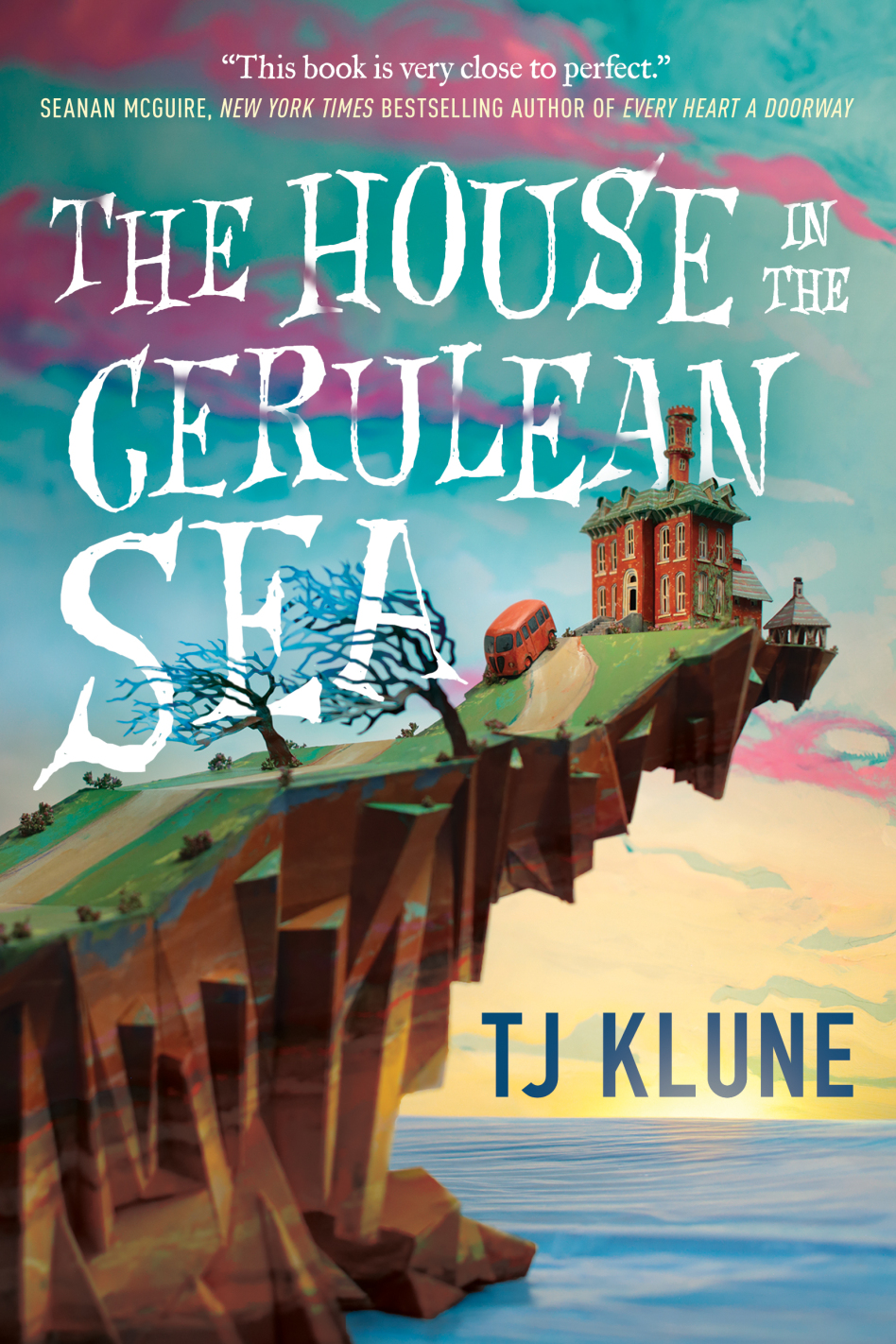
Review: The House in the Cerulean Sea by T.J. Klune

A magical island. A dangerous task. A burning secret.

Linus Baker leads a quiet, solitary life. At forty, he lives in a tiny house with a devious cat and his old records. As a Case Worker at the Department in Charge Of Magical Youth, he spends his days overseeing the well-being of children in government-sanctioned orphanages.

When Linus is unexpectedly summoned by Extremely Upper Management he’s given a curious and highly classified assignment: travel to Marsyas Island Orphanage, where six dangerous children reside: a gnome, a sprite, a wyvern, an unidentifiable green blob, a were-Pomeranian, and the Antichrist. Linus must set aside his fears and determine whether or not they’re likely to bring about the end of days.

But the children aren’t the only secret the island keeps. Their caretaker is the charming and enigmatic Arthur Parnassus, who will do anything to keep his wards safe. As Arthur and Linus grow closer, long-held secrets are exposed, and Linus must make a choice: destroy a home or watch the world burn.

An enchanting story, masterfully told, The House in the Cerulean Sea is about the profound experience of discovering an unlikely family in an unexpected place—and realizing that family is yours.


Honestly, such an excellent book. I have been recommended this multiple times, and it obviously has the cutest cover ever, but I was never sure exactly what the story was about, and people’s explanations were always extremely vague. Nevertheless, I finally put my hold down on the book and got to reading it and I am super glad I did.

The House in the Cerulean Sea is a book about our protagonist, Linus, who is probably in many ways ordinary. However, through his career, he is selected to go on a particular mission to scout out a particular special orphanage located on a secluded island. The story is told in a charming narrative format, almost like a short story or fable. However, the topics that are explored were excellent, and full of life as we meet these special children and the other inhabitants of this particular island.

Continue reading “Review: The House in the Cerulean Sea by T.J. Klune”
discussion

Let’s Talk Bookish – Second Book Syndrome

Aria @ Book Nook Bits is the new host for Let’s Talk Bookish! If you aren’t following her yet, good check out her blog and give her a follow!

December 15: Second Book Syndrome 

PromptsSecond book syndrome is often seen in series where the sequel, or second book, isn’t as good as the first, making the sequel less interesting or engaging. Do you notice this frequently in books you read? What are some of the best sequels you’ve read that avoid this entirely?

Welcome to another week of LTB here at DTRH, everyone! Today’s topic is a good one, and something that I had thought about pretty recently so it actually works out well. One thing I do wonder is if books are actually less well-written the second time around, or whether it is merely our perspective that changes. Or maybe a combination of the two?

As a reviewer and blogger, as much as my perspective is subjectively my own, I do try and offer as much objectivity as I can as well, especially when it comes to critique about the writing itself. But that being said, I find it so difficult to disentangle what is objectively good, versus what was just my impression and expectations going into the second book, after the first one really blew me away. I do think that authors nowadays are more cognizant that readers have quite high expectations going into sequels though, and I think in general they do try their best to deliver a great second book, and not just ride the hype of their first book.

For me, it’s usually the world-building books that make me feel like I really want a sequel to see more of it. Six of Crows, Caraval, and Shadow of the Fox are just some of the titles that come to mind. And I think all of those series (and more) all had pretty good, albeit slightly less good, second and third books. I think for the most part I did get what I wanted out of the sequels, but perhaps I just wanted more out of it. This is not surprising though, as the first book is like opening the door to a wonderful world, where your imagination can take over and create endless possibilities; whereas, the second book is forced to tie things down and provide an ending that may not have been what you were expecting. So understandably, second books will often be more of a let down (or at least, generally less exciting), because it tends to be more limiting and finite on what can be expressed.

Fortunately, I feel like the books that I have read over the past year or two have generally had decent sequels. Enough that I’m at least excited for a third book, if there is one, and there haven’t been any that come to mind where the second book was just truly terrible and completely turned me away from the series altogether. However, particularly the fantasies, or the ones where the world-building is my favourite part, I recognize that it’s certainly hard to provide more of that magical feel of stepping into a world for the first time, while still providing interesting plot and character development around a central theme. I really have to give kudos for authors being able to write these sequels—it’s certainly not easy.

One second book that I really did enjoy was The Crimson Fortress, though (The Ivory Key duology). I really do feel like this book delivered basically as hard as the first book, and I do wonder a bit if I just perhaps related a lot to the themes, so that the second book still had major impact. I actually rated both books a full five points, and I doubt this will happen again in the near future. I think the combination of the themes, the world-building, the mechanics of magic, and the fast-paced plot that I enjoy really came together in a spectacular combination that I personally really loved. I think the second book was just different enough to provide a fun and new take on the story, while still maintaining all the same memorable characters and enchanting world from book one.

How do you all feel about second books? Do you mostly feel disappointed? Or do you mostly have a good impression of them? Let me know in the comments below!