
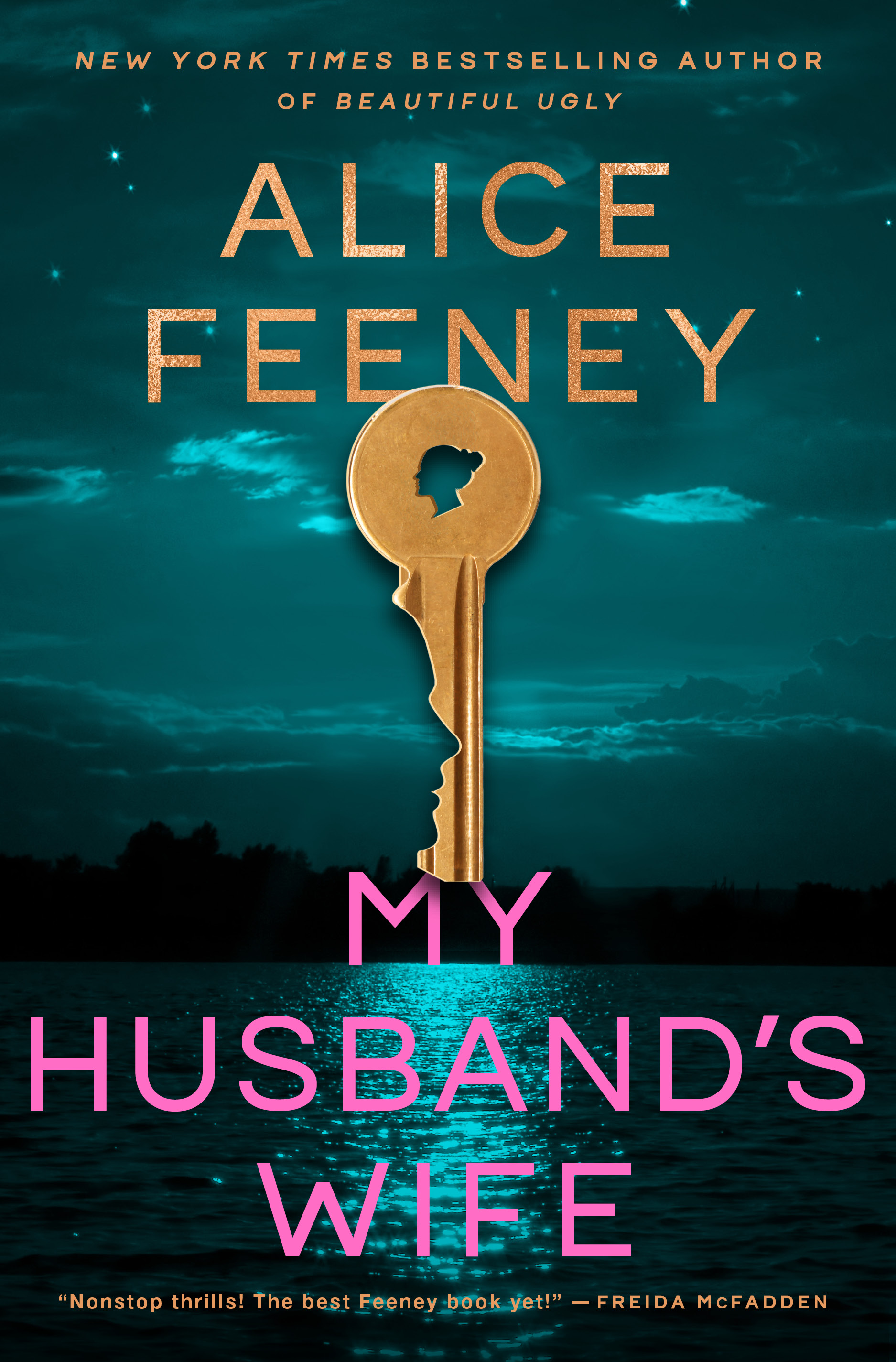
Eden Fox, an artist on the brink of her big break, sets off for a run before her first exhibition. When she returns to the home she recently moved into, Spyglass, an enchanting old house in Hope Falls, nothing is as it should be. Her key doesn’t fit. A woman, eerily similar to her, answers the door. And her husband insists that the stranger is his wife.
One house. One husband. Two women. Someone is lying.
Six months earlier, a reclusive Londoner called Birdy, reeling from a life-changing diagnosis, inherits Spyglass. This unexpected gift from a long-lost grandmother brings her to the pretty seaside village of Hope Falls. But then Birdy stumbles upon a shadowy London clinic that claims to be able to predict a person’s date of death, including her own. Secrets start to unravel, and as the line between truth and lies blurs, Birdy feels compelled to right some old wrongs.
My Husband’s Wife is a tangled web of deception, obsession, and mystery that will keep you guessing until the last page. Prepare yourself for the ultimate mind-bending marriage thriller and step inside Spyglass – if you dare – to experience a story where nothing is as it seems.
So I’m back with a second Alice Feeney, as promised. This book was definitely better and didn’t make me pull my hair out with the ending. It still left me underwhelmed, but not disappointed and frustrated like last time.
My Husband’s Wife is told in mainly two POVs, Eden Fox and Birdy. Although their timelines are initially six months apart, the tying link is that they have both been at Spyglass, a home on the isolated cliffs in Hope Falls. Eden’s story is very peculiar: after coming home from a run, she finds that the locks have been changed, and a woman is living her place, claiming to be her—and her husband agrees. Birdy, on the other hand, is a bit down on her luck with her physical health, and encounters a mysterious clinic that claims to be able to tell you your date of death.
At once the premise is instantly intriguing. It is clear from page one that at least one of the two “wives” is lying. As an avid thriller reader, I immediately have to cast heavy doubts on my narrator for being unreliable. How quick can someone change the locks when you’re on a run? And how is it that the whole town does not recognize you? Just who is lying? Because of the rather implausible nature of the situation, I did have high doubts of the narrator, but I also had high expectations for a plausible explanation that is also worth the suspense. Ultimately, the book didn’t totally deliver.
For the first third of the book, I struggled to see the connection between the two POVs (which is okay). The bigger problem is that it was hard to see the stakes for Birdy at first. The writing itself was good, and a mysterious solicitor coming to say that an estranged grandmother left you some property is intriguing. However, I felt like the book was definitely missing that little bit extra to make me really care about the characters. Because these narrators were a bit unreliable, it already felt to me from the get-go that they could be the culprit themselves. While it was unclear and a bit confusing as to just how this whole situation could come about (a pharma-tech company that can predict your death?), it just felt hard to keep the facts straight. And even when they were eventually unraveled, it was hard to understand just how it all came about in a believable way. Too many things for me happened just for the sake of the story and make sense logically, but the whole thing put together was just a little bit far-fetched (although at least more believable than last time).
The suspense overall was good. And I think kudos to her writing in general for being generally engaging. Ultimately the biggest problem I still have is the story itself, in the way that it carries out and resolves. I did feel the tension as the lies were unfolding, but it was such a messy web, with unclear motives and so many crosslinks that it was easy to get lost and not understand the full picture. In a way, I think there were too many reveals, some of which felt fairly inconsequential, and others of which were consequential but were not thoroughly explored. Too much came out of nowhere to “explain” something which didn’t feel like enough for me personally.
The denouement and ending felt a little bit flat for me. By around 70% of the book, I think the biggest reveals had already been kind of hinted at, and so even though the emotional climax hadn’t been hit yet and the ultimate twists and turns still had a way to go, I already felt like the ending was a foregone conclusion and we were just looking for retroactive explanations for what I already knew. This kind of style just doesn’t work for me, as it feels like an explanation after the fact to make what already happened make sense, rather than things that made sense being completely subverted by a big twist at the end.

 Down the Rabbit Hole