Let’s Talk Bookish is a weekly meme, hosted by Rukky @ Eternity Books & Dani @ Literary Lion, where they discuss certain topics, share their opinions, and spread the love by visiting each others’ posts.
JUNE 25: GOOD COVERS VS. GOOD PLOTS (SUGGESTED BY KRUPALI @ MUSINGS OF SOULS)
Prompts: When you pick books to buy, what is more likely to sway you: a good cover or a good plot? When you choose to unhaul books do you sometimes keep bad books if they’re pretty? Do you love a book less if the cover is ugly even if the story is good? Do you like covers less if it turns out the story inside isn’t very interesting? Would you rather have a shelf of good stories or beautiful covers?
Welcome to the last week of June LTB everyone! Today’s topic is quite the classic, and I’m glad to be expanding a bit on it. Make sure to follow Krupali who suggested this topic as well (linked above)! Without further ado, let’s go!
When you pick books to buy, what is more likely to sway you: a good cover or a good plot?
I’m gonna have to be honest, when I’m shopping in person, a good cover is (almost) always necessary. My train of thought is: if it’s a bad book, at least it’ll look good on my shelf! That being said, with the rapidly decreasing real estate on my bookshelf, I have been trying my best recently not to buy any books, pretty cover or not. Obviously, if I already know the plot of the books in questions, I would rather buy the book with a good plot that I know I like, rather than just for aesthetic purposes.
When you choose to unhaul books do you sometimes keep bad books if they’re pretty?
Yes, I’m definitely guilty(?) of this. Is this a bad thing? I don’t know, but I figure who has a use for a bad book anyway? Might as well keep it nice looking on my shelf. Unless I’m running out of space, in which case it’s really no loss to anyone.
Do you love a book less if the cover is ugly even if the story is good?
As much as I judge books by their cover (sorry!), I actually don’t care about the cover at all if the story is good. The cover (and a good title) is just a nice tool to bait me into reading a book. After reading a book and deciding it’s good, I have no qualms for whatever the cover/title might be – it’s definitely the inside content that counts for books in the end! It might just be harder to convince others to read it.
Do you like covers less if it turns out the story inside isn’t very interesting?
Actually, yes I think there is something to be said about this. I have definitely been disappointed before, and if the overall book just isn’t very good…then it really is just a waste of a nice cover. It really just becomes quite a disappointment, and may make me feel like it was a waste of time to read it.
Would you rather have a shelf of good stories or beautiful covers?
This is actually such a difficult question to answer. On the one hand, the whole point of having a nice bookshelf displayed is to have beautiful books to catch the eye and act as decoration. On the other hand, what’s the point of anyone looking at it if there’s nothing good (of substance) there? I guess the best way is to have a mix of both – some eye catching titles, and some actually good books to read as well. Of course, the best of both worlds would be the most ideal! It’s definitely just a personal preference though, I wouldn’t fault anyone going either way with their bookshelf. I may just have some qualms if every book on your shelf has a broken spine!
What do you all think? When it comes to books on your shelves is it all a matter of looks or quality? Or perhaps a mix of both?
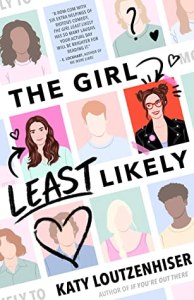
To All the Boys meets The Marvelous Mrs. Maisel (with a dash of Dumplin’) in this funny, romantic, and heartfelt coming of age story about a teen stand-up comic learning how to be her truest self, from the author of If You’re Out There.
Gretchen has always been more of a “least likely” than a “most likely” kind of girl. So how does she somehow find herself living out every trope from her favorite rom-coms…?
The Best Friend Crush: Why is it suddenly so hard to act normal around her childhood BFF, Samuel? Must be time for a—
Makeover(!): Black leather pants and some red lipstick are apparently enough to lend Gretchen the bravado to do an impromptu set at a comedy club, and catch the eye of—
The Roguish Bad Boy: Jeremy, the alluring young comic who thinks her name is Sabrina. It might just be—
The Perfect Cover: A funny-girl alter-ego that frees Gretchen to explore who she really is—and what she really wants. But as rom-coms have taught her, leading a double life can only last so long.
**The Girl Least Likely comes out June 29, 2021**
Thank you Edelweiss and HarperCollins for this copy in exchange for an honest review.
Ever felt like you had a love-laugh relationship with romantic comedies? You don’t wanna admit that you like them – because let’s be honest you much rather make fun of some of their biggest tropes – yet you know almost everything there is to know about the biggest rom-com hits of the last decade or more. Wouldn’t that technically make you a fan?
Well, The Girl Least Likely is a lot like that and for sure you’d enjoy our heroine Gretchen for this reason. In the vein of various rom-com tropes, each chapter dives fully into one that connects well with the overall story.
A girl falls for her best friend but he doesn’t like her that way (possibly?). She ends up with an alias in the most unlikely ways that she finds herself using to catch the eye of another intriguing guy (who may just be interested in her too?). What could ever go wrong with that? I personally love the falling for the best friend trope but if that’s not your cup of tea, bad boy Jeremy may definitely fill that area.
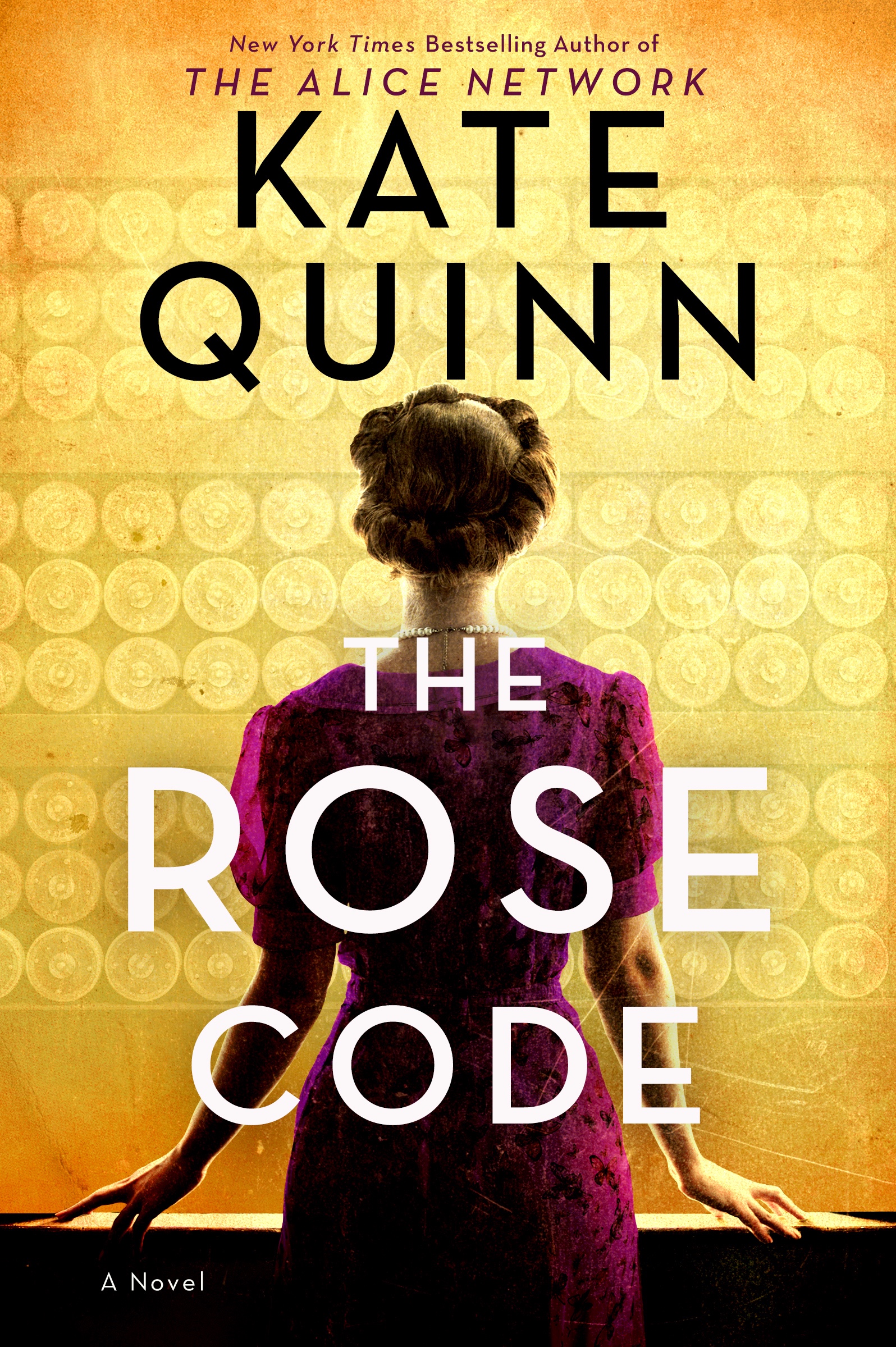
1940. As England prepares to fight the Nazis, three very different women answer the call to mysterious country estate Bletchley Park, where the best minds in Britain train to break German military codes. Vivacious debutante Osla is the girl who has everything—beauty, wealth, and the dashing Prince Philip of Greece sending her roses—but she burns to prove herself as more than a society girl, and puts her fluent German to use as a translator of decoded enemy secrets. Imperious self-made Mab, product of east-end London poverty, works the legendary codebreaking machines as she conceals old wounds and looks for a socially advantageous husband. Both Osla and Mab are quick to see the potential in local village spinster Beth, whose shyness conceals a brilliant facility with puzzles, and soon Beth spreads her wings as one of the Park’s few female cryptanalysts. But war, loss, and the impossible pressure of secrecy will tear the three apart.
1947. As the royal wedding of Princess Elizabeth and Prince Philip whips post-war Britain into a fever, three friends-turned-enemies are reunited by a mysterious encrypted letter–the key to which lies buried in the long-ago betrayal that destroyed their friendship and left one of them confined to an asylum. A mysterious traitor has emerged from the shadows of their Bletchley Park past, and now Osla, Mab, and Beth must resurrect their old alliance and crack one last code together. But each petal they remove from the rose code brings danger–and their true enemy–closer…
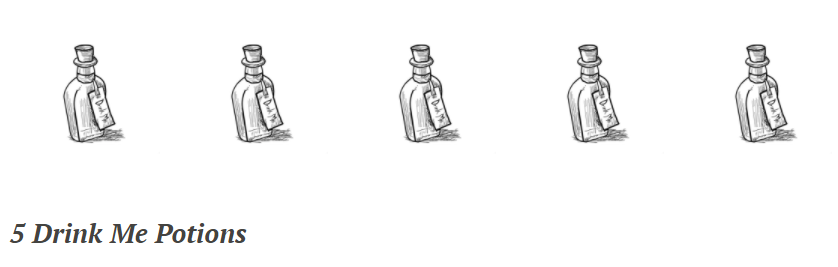
Welcome back to another buddy read here at Down the Rabbit Hole! This time we are taking a dive together into historical fiction, a novel set in UK in the 1940’s, during World War II. And man oh man were we impressed. As we were reading through it together, we were already getting more and more excited. I was a bit hesitant through the first part, but Andge already loved it. I was completely on board after reading a tiny bit more. Both of us agreed that the book was heading to either a 4 or 5 Drink Me Potions rating depending on the ending. And as you can already see, the ending really delivered. Read more below to get a further breakdown of what we thought of The Rose Code!
Pacing and Suspense Build-Up
Yes I know this is technically not the heading you expect to see in a historical fiction, but this story played out a bit like a mystery/suspense novel, so here it is! This story takes place over two main time periods: during the war and after the war (“the present”). The author is intentionally quite vague in the present, leaving out many names and leaving us in the dark about the outcome of our three protagonists. There is also a mysterious incident that leaves the three of them estranged in the present day, even though they meet and become best of friends in the past. These different elements comprise the element of “mystery” that we as readers are so desperate to find out as we read through the book.
Overall the pacing of the book is very well done, at a speed that isn’t too slow and isn’t too fast either. We are introduced to a lot of information but it is fed to us at a reasonable pace. The suspense was even more well done. Even though Andge and I had continuous discussions trying to discuss what might happen in the book, we were still blown away when all was revealed. Sure we were able to guess a few elements, but there was also so much more that we were not expecting. Excellent pacing and suspense in this book gives a good sense of forward momentum in this book, something Andge and I both thoroughly enjoyed.
Historical Elements
I am no expert when it comes to historical fictions, but I think I have also been spoiled in my reading career, only having read historical fictions when I get a recommendation – which really limits the number of “bad” ones that I read. However, that being said, even I can tell that The Rose Code was meticulously researched, and the elements were slipped in so smoothly, we both felt like we had time travelled back to the 1940s when we were reading this book. The use of the old-fashioned terminology and terms of endearment, as well as the set up of the whole environment of the war and after the war felt super realistic. Serious kudos to the author Kate Quinn.
Another thing Andge and I really enjoyed was the perspective of history that this novel took. I personally normally have less interest in war novels, especially in the aspects of fighting the actual war. However, in this novel, we focus more on the tactical and strategic behind-the-scenes aspects of the war. Honestly this wasn’t even an aspect of the war I was very familiar with, and that gave it an extra spark of life as we learned about this secret world of code cracking. It was relatable too, as we could imagine ourselves to have probably been recruited to such a facility as well, should we have been alive during WWII. Being surrounded by these educated codebreakers definitely seemed like an environment that we might also have thrived in, which provided another layer of interest.
Characters
There were the three main ladies as our protagonists but as well as a wealth of other characters that appeared on their journey. It was truly a magical experience to journey through all their storylines. Each character came from such a different background and upbringing, yet each belonged at BP in their own special way. The way we got to see them come together and become billet-mates then best friends from strangers certainly took Andge and I on an emotional journey. And what was it that happened to trigger their estrangement? Aside from the whole backdrop of the war, the storyline of these three women was truly something to be invested in.
These three were lovable and personable even with all their individual quirks. And we as readers almost felt as if we were part of their friend group too, since we come so close to witnessing everything that transpires between them. In a world full of secrets and the sworn oath to the Secrecy Act, nobody knows who to trust. Every other character that you come across could be either friend or foe. This really created a whole element of tension and excitement, as you might find in a mystery book.
I wish I could tell you more, but I already feel dangerously close to giving away too much! The characters develop well and all three storylines are very intriguing and balanced, no throwaway POVs (thank goodness). One last thing I will mention though is the character (based on the real) Prince Phillip. Yes, you know the one – of England who has recently passed away. The only thing we found “weird” about this book was reading about young Prince Phillip – it’s hard to imagine any other image in our heads other than his…usual look. In other words, sometimes it’s hard to separate the real person from a fictionalized version when said person was someone in our own timeline. That aside though, the research into all the characters based on real humans in history was also very well incorporated – another point for the author here!
Ending
Again, an interesting header for a historical fiction novel but hear us out. Obviously no spoilers here, but given that there was a mystery and suspense element, of course we had to talk about how we felt about the ending! Andge and I were super excited by about 2/3 of the way into the book, talking about how it really could be up to a 5 Drink Me Potions kind of book, or possibly just a 4 with a very weak ending. But let me just tell you now, the ending had everything we wanted to see and more.
The finale was worth every part of the suspense that was built up, and it was an extremely satisfying ending. We were discussing that we would be okay with a closed or an open ending, and we won’t spoil which one we got, but I can definitely tell you even within the category, we got so much more than we bargained for. We thought that the ending (and the entirety) of this book was so good, we just might have to do another Kate Quinn for our next buddy read. Seriously, we highly recommend this one. Even if you aren’t a fan of WWII historical fictions, give it a try – I think you’ll like what you find!






 Down the Rabbit Hole