Let’s Talk Bookish is a weekly meme, hosted by Rukky @ Eternity Books & Dani @ Literary Lion, where they discuss certain topics, share their opinions, and spread the love by visiting each others’ posts.
POV = point of view
Today’s Prompt: What do you think is the meaning of diverse? Who do you think is qualified to write a diverse book? How do you find diverse books to read? What are some diverse topics/POVs that you specifically look for when you’re finding books and why? How do you decide if a diverse topic/POV is done well?
This is such a relevant topic in today’s scene, and something I have been thinking about more and more lately. I didn’t used to reach out and search for diversity in books, but after having read some suggestions from friends, I definitely keep an eye out for them now. For me, the meaning of diverse (in books) is to have diverse characters where appropriate: people of various genders, race, sexual orientation, etc. as long as it makes sense in the story.
Another meaning of diverse is to have different kinds of authors represented in market. As an Asian person, I feel called to read books by other Asian authors, like Celeste Ng, the author of Little Fires Everywhere. Often, such authors will write from the perspective of their diverse upbringing, and it is always refreshing to see new perspectives and ideas being introduced into the book world.
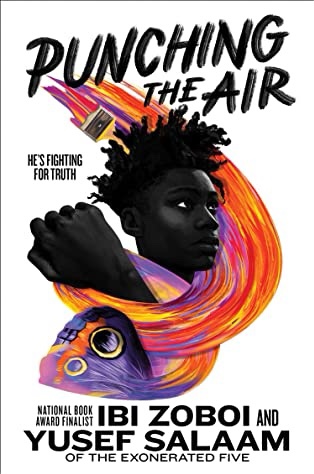
With the proper research, almost anyone can write a diverse book. But of course, those most qualified are often the people write about their own backgrounds. I find that for historical fictions, and other research-heavy genres, good research is often enough to write a good diverse book. However, when it comes to specific perspectives based on the experiences of minority people (e.g. Punching the Air), I find that this is best left to those who actually have personal experience(s) with the issue.
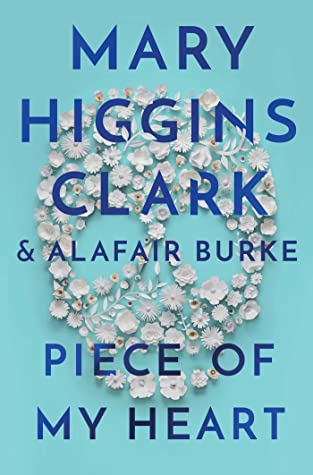
In the latest thrilling collaboration from #1 New York Times bestselling author and “Queen of Suspense” Mary Higgins Clark and Alafair Burke, television producer Laurie Moran must solve the kidnapping of her fiancée’s nephew—just days before her wedding.
Television producer Laurie Moran and her fiancée, Alex Buckley, the former host of her investigative television show, are just days away from their mid-summer wedding, when things take a dark turn. Alex’s seven-year-old nephew, Johnny, vanishes from the beach. A search party begins and witnesses recall Johnny playing in the water and collecting shells behind the beach shack, but no one remembers seeing him after the morning. As the sun sets, Johnny’s skim board washes up to shore, and everyone realizes that he could be anywhere, even under water.
A ticking clock, a sinister stalker, and fresh romance combine in this exhilarating follow up to the bestselling You Don’t Own Me—another riveting page-turner from the “Queen of Suspense” Mary Higgins Clark and her dazzling partner-in-crime Alafair Burke.
“Queen of Suspense” is totally correct! While I haven’t read her works before, Mary Higgins Clark definitely does a great job of stretching out the tension and building upon it throughout an entire novel. At moments she lets the tension go a bit slack just to reel you in, before snapping it right back taut. Masterfully manipulated suspense was definitely one of my thoughts as I read through this thriller.
Piece of My Heart centres around a few parallel plotlines, multiple families, each experiencing some sort of tragic loss. The novel takes us through the journey of how these families recover from the tragedies of their past and move forward, all within the suspense of a kidnapping. Many questions are posed from the beginning, and the layers of suspense grows and grows from the beginning all the way to the climax and the denouement.
From award-winning, bestselling author Ibi Zoboi and prison reform activist Yusef Salaam of the Exonerated Five comes a powerful YA novel in verse about a boy who is wrongfully incarcerated. Perfect for fans of Jason Reynolds, Walter Dean Myers, and Elizabeth Acevedo.
The story that I thought
was my life
didn’t start on the day
I was born
Amal Shahid has always been an artist and a poet. But even in a diverse art school, he’s seen as disruptive and unmotivated by a biased system. Then one fateful night, an altercation in a gentrifying neighborhood escalates into tragedy. “Boys just being boys” turns out to be true only when those boys are white.
The story that I think
will be my life
starts today
Suddenly, at just sixteen years old, Amal’s bright future is upended: he is convicted of a crime he didn’t commit and sent to prison. Despair and rage almost sink him until he turns to the refuge of his words, his art. This never should have been his story. But can he change it?
With spellbinding lyricism, award-winning author Ibi Zoboi and prison reform activist Yusef Salaam tell a moving and deeply profound story about how one boy is able to maintain his humanity and fight for the truth, in a system designed to strip him of both.
Welcome to our newest buddy review for Punching the Air! Now this is a truly special one, a book in a category that neither of us really have that much experience in. What better way to explore a new genre than to do it together in a buddy review? This time, we thought it would be fun to have kind of in a mini Q&A format, to perhaps show off a bit more of our individual voices.
Punching the Air is a novel written in verse, although when I say novel here, I really mean it as more of a collection of poems, separated into three main sections, but each comprised of many individual short poems. Through these poems, the authors paint a sadly realistic story of a Black teenager, Amal, who gets put through the American prison system, and the perspectives and views from the inside looking out.
How was the structure and formatting in the book? Did you like it?
Fives: Not a question normally posed, but quite pertinent in this case. Here the authors really employed all sorts of techniques to create emphasis and meaning in their poems. There was good rhythm and flow, and the use of spacing and lines were well done. Another great element in this book was the use of concrete poetry, which uses a visual element to enhance the meaning or emphasis of a poem. For example, to describe being boxed in, the text is literally written in the form of little square paragraphs, symbolizing the actual boxing in of Amal’s freedom and humanity.
The authors also used repetition a lot, for emphasis, but also to show the change and growth of a motif as it came back each time. With each repetition the imagery became more powerful, and they would transform the motif a bit each time too, to indicate increasing pressure or weight. Overall, I really enjoyed all these elements that they put into the book. And the message of the book aside, the poems in itself are already powerful enough – which is really saying something.
Andge: I think this was something Fives mentioned in our discussion, but this is the only time I can say a book has made good use of their white space. While I can appreciate art and the overall look of the book, I really have to commend the writing. The repetition for emphasis when needed, the allegories and metaphors describing Amal’s every situation. Fives mentioned the boxing in. Amal also describes the friends around him in prison as Corners, protecting him but also acting as another form of repression.
Another example is the heavy weight that always chokes him and presses on his chest. We see how it progresses from a stone in his throat and a brick in his chest to a mountain and a building and then to a country and a city. We can understand and grasp what that sensation is like, as well as the its enlargement as situations make it harder and harder to to feel free. When Amal finally deals with some things that allow him to hope and breathe easier, we can feel it too as the stone in his throat and the brick in his chest drops away. These are only a few examples of the different lyrical tools the authors put to use to help us feel in Amal’s shoes – and it is absolutely brilliant.



 Down the Rabbit Hole